The Future of AI in Finnish Schools: Ethics, Innovation, and Learning






A New Era of Learning Begins
What if classrooms could understand every student’s needs? What if learning felt personal, engaging, and meaningful every single day?
This is not a distant dream. It is already taking shape in the future of AI in Finnish schools.
Finland has long been known for its world-class education system. But today, it is not standing still. It is moving forward carefully, thoughtfully, and with a clear purpose. Artificial intelligence is becoming part of everyday learning, not as a replacement for teachers, but as a powerful support tool.
In Finnish schools, AI is not about machines taking control. It is about helping humans learn better. It supports teachers, guides students, and creates a learning environment where everyone can succeed.
So, what makes Finland’s approach so special? And why are educators around the world paying close attention?
Let’s explore.
Finland’s Education Philosophy: The Strong Foundation Behind AI Success
To understand the future of AI in Finnish schools, we must first understand the foundation it stands on.
Finland’s education system is built on trust. Teachers are highly trained professionals. They are given the freedom to design lessons that truly help students learn. There is very little pressure from standardized testing. Instead, the focus is on growth, curiosity, and well-being.
This philosophy creates the perfect environment for AI.
Why? Because AI works best where learning is flexible. It thrives in systems that value individual progress over rigid outcomes.
In Finland:
- Every student matters equally.
- Learning is tailored to individual needs.
- Teachers are trusted decision-makers.
When AI enters such a system, it does not disrupt it enhances.
What Does AI Look Like in Finnish Classrooms Today?
AI in Finnish schools is not something abstract or futuristic. It is already part of daily learning experiences, and often in ways that feel natural rather than technical.
Imagine a student working on math exercises during a lesson. The system adapts in real time. If the student struggles, the platform offers simpler steps, hints, or even short explanations. If the student excels, it introduces more challenging problems that push deeper thinking.
This is personalized learning powered by AI but guided by the teacher.
Teachers also benefit in very practical ways. Instead of spending hours grading assignments or tracking progress manually, AI tools provide quick and clear insights. For example, a teacher might see that several students are struggling with the same concept. This allows the teacher to adjust the lesson immediately rather than waiting until the next test.
Language learning is another area where AI shines. Students can practice speaking with intelligent systems that give instant feedback on pronunciation, fluency, and grammar. A shy student, who may hesitate to speak in front of others, can practice freely and build confidence step by step.
In some classrooms, AI also helps recommend learning materials. A student interested in science might receive additional articles, videos, or exercises tailored to their level and curiosity.
In many classrooms, AI acts like an invisible assistant. It does not take attention away from the teacher. Instead, it works quietly in the background supporting learning, guiding progress, and making the entire experience smoother and more effective for everyone involved.

Ethical AI in Finnish Schools: A Human-First Approach
One of the most powerful aspects of the future of AI in Finnish schools is its strong ethical foundation.
Finland does not rush into technology. It asks important questions first.
How is student data protected?
Who controls the technology?
How do we ensure fairness?
These questions guide every decision.
AI in Finnish education is transparent. Students and teachers understand how tools work. Data privacy is taken seriously. Systems are designed to protect sensitive information.
Most importantly, AI is never seen as a replacement for teachers. It is a support system.
Students are also taught about AI itself. They learn how it works, its benefits, and its limitations. This builds critical thinking skills and prepares them for a digital future.
7 Inspiring Ways AI Is Transforming Finnish Classrooms
1. Personalized Learning Paths for Every Student
No two students learn in the same way. AI makes it possible to respect this difference in a very practical way.
In Finnish classrooms, students often use digital learning platforms that adapt in real time. For example, a student working on math may receive easier step-by-step guidance if they struggle with fractions. At the same time, another student who understands quickly may be given more complex problem-solving tasks.
This means students are neither bored nor overwhelmed. Each learner moves at the right pace.
Teachers can also see progress through simple dashboards. If a student is stuck on one topic for several days, the teacher can step in early and provide support.
Learning becomes a journey tailored to the individual, guided by both AI and human care.
2. Smarter Support for Teachers
Teachers remain at the heart of education. AI simply gives them better tools to make informed decisions.
In practice, teachers in Finland may use AI-powered systems that summarize student performance. Instead of checking every assignment manually, they receive clear insights such as: which students need help with reading, who is improving, and which topics require more attention.
For example, a teacher might notice that several students are struggling with writing structure. Instead of guessing, the data highlights the pattern instantly. The teacher can then design a focused lesson to address it.
This saves time and reduces routine workload. More importantly, it allows teachers to focus on meaningful interactions discussions, mentoring, and encouragement.
3. Inclusive Education for All Learners
Inclusivity is a core value in Finland, and AI strengthens this commitment.
Students with different learning needs benefit from supportive tools. For example, text-to-speech software helps students who find reading difficult. Speech-to-text tools allow students to express ideas without being limited by writing challenges.
In some classrooms, AI-based platforms adjust reading levels automatically. A student reading the same story as others might see a simpler version of the text, while still participating in the same lesson.
This ensures that no student feels left behind. Everyone can take part, learn, and succeed together.
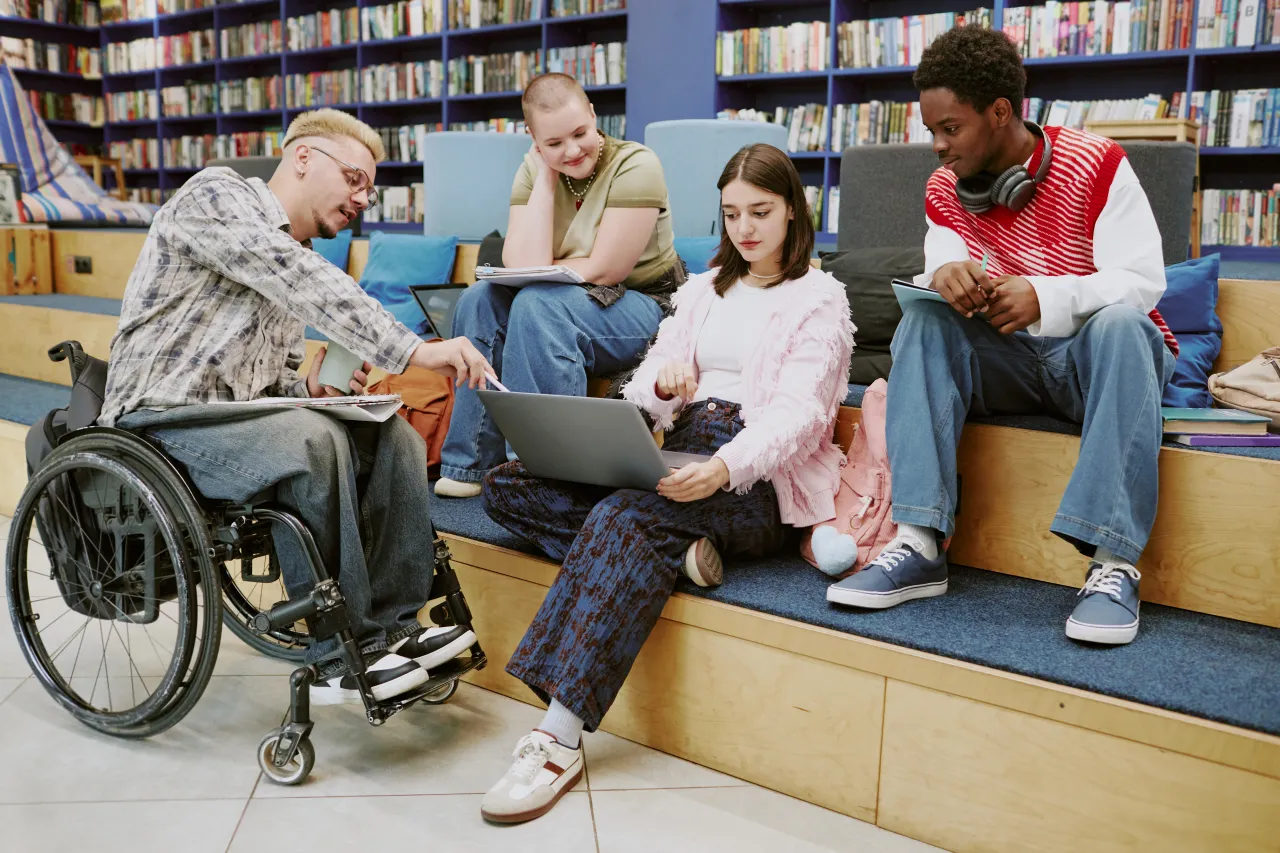
4. Real-Time Feedback That Drives Improvement
Feedback is essential for learning. But traditional feedback can take time, and delays can slow progress.
AI changes this by making feedback immediate and actionable.
For instance, when a student writes an essay using a digital tool, the system can suggest improvements in grammar, structure, or clarity right away. In math exercises, students see instantly whether their answer is correct and if not, they receive hints to guide them.
This creates a continuous learning loop. Students try, adjust, and improve in real time.
As a result, learning becomes more active and engaging. Students are not waiting they are constantly moving forward.
5. Advanced Language Learning Experiences
Finland values multilingual skills, and AI is making language learning more dynamic.
Students can now practice speaking with AI-powered tools that simulate real conversations. For example, a student learning English might speak into an app that responds naturally and provides feedback on pronunciation.
Some tools even adjust difficulty based on the learner’s level. Beginners receive simple phrases, while advanced learners engage in more complex discussions.
This reduces fear and builds confidence. Students can practice as much as they want without feeling judged.
Language learning becomes interactive, safe, and enjoyable.
6. Encouraging Creativity and Critical Thinking
Some people worry that AI might reduce creativity. In Finland, the opposite is happening.
Because AI handles repetitive tasks like basic drills or corrections teachers have more time to design creative activities.
For example, students may use AI tools to research topics quickly, then work in groups to create presentations, videos, or projects. The focus shifts from memorizing facts to applying knowledge.
In one classroom, students might explore climate change using AI-assisted data tools, then present their own solutions. The technology supports the process, but the thinking comes from the students.
This encourages deeper understanding, creativity, and independent thinking.

7. Preparing Students for the Future Workforce
The future job market will be shaped by technology, and Finnish schools are preparing students with real-world skills.
Students do not just use AI tools they learn how they work. In some lessons, students explore basic concepts of artificial intelligence, such as how algorithms make decisions.
For example, students might experiment with simple AI models to understand bias or accuracy. This builds awareness and responsibility.
They also develop essential skills like problem-solving, collaboration, and adaptability. These skills are valuable in any future career.
By combining technology with human skills, Finnish education prepares students not just for jobs but for lifelong learning.
These are essential skills for the future.
The Role of Teachers in an AI-Driven System
In the future of AI in Finnish schools, teachers are more important than ever. Technology may be evolving quickly, but the human connection in education remains at the center of everything.
AI does not replace teachers. Instead, it strengthens their role in meaningful and practical ways. In Finnish classrooms, teachers are not just delivering content. They are mentors, facilitators, and guides who understand each student’s needs, emotions, and learning journey.
AI supports this role by handling routine and time-consuming tasks. For example, instead of spending hours correcting basic exercises, teachers can use AI tools that provide instant feedback to students. This allows teachers to focus on deeper learning activities such as group discussions, creative projects, and one-on-one support.
In practice, a teacher might use AI insights to identify that a student is quietly struggling with reading comprehension. With this knowledge, the teacher can provide targeted support early, before the problem grows.
This partnership between humans and technology creates a powerful learning environment. AI provides the data and efficiency, while teachers provide empathy, creativity, and guidance. Together, they form a balanced and effective system.
How Students Benefit from AI in Finnish Schools
Students are at the center of everything in Finnish education, and AI strengthens this student-focused approach.
With AI, learning becomes more engaging and interactive. Instead of following the same path as everyone else, students experience lessons that adapt to their level and interests. This makes learning feel more personal and relevant.
For example, a student who enjoys science might receive additional AI-recommended experiments, videos, or reading materials. Another student who needs more time with basic concepts can practice at their own pace without feeling pressure.
Students also gain confidence as they see their progress in real time. When feedback is immediate, they understand their mistakes quickly and improve faster. This builds a sense of achievement and motivation.
Beyond academic skills, students develop important life skills. They learn how to think critically, question information, and solve problems. They also become familiar with technology in a responsible way.
Learning becomes not just about gaining knowledge, but about growing as an independent and capable individual.
Finland as a Global Leader in AI Education
Finland is not working alone in shaping the future of AI in education. It actively collaborates with researchers, technology experts, and international organizations to create responsible and effective solutions.
One of the most well-known initiatives is Finland’s focus on AI literacy. Programs such as public AI courses and school-level learning modules help both students and adults understand how artificial intelligence works in everyday life.
According to the Finnish Center for Artificial Intelligence (https://fcai.fi), education plays a key role in building an AI-ready society. This means not only using AI tools, but also understanding their impact, limitations, and ethical considerations.
Finnish schools often partner with universities and technology companies to test new learning tools. These collaborations ensure that innovations are research-based and practical.
This strong connection between education, research, and innovation makes Finland a global leader. It shows that AI can be introduced in a careful, thoughtful, and human-centered way.

What Other Countries Can Learn from Finland
The future of AI in Finnish schools offers valuable lessons for educators around the world.
One key lesson is that technology should always support human values. In Finland, AI is not used simply because it is new. It is used because it improves learning and supports students and teachers.
Another important lesson is trust. Teachers are trusted to choose how and when to use AI tools in their classrooms. This flexibility allows them to adapt technology to real learning needs.
For example, instead of forcing one system across all schools, Finland allows teachers to experiment and share best practices. This leads to more effective and meaningful use of AI.
Countries can also learn from Finland’s focus on ethics. By teaching students about AI, not just using it, schools prepare learners to think responsibly about technology.
These ideas can be adapted to different education systems, regardless of size or resources.
Experience the Future Firsthand
Reading about Finnish education is inspiring. But seeing it in action is even more powerful.
Imagine walking into a Finnish classroom. You see students actively engaged in their work. Some are using digital tools, others are discussing ideas in groups, and the teacher is guiding the learning process with calm confidence.
You notice how technology fits naturally into the environment. It is not the focus of the classroom, but a quiet support system that enhances learning.
Visitors often describe this experience as eye-opening. It changes the way they think about teaching, learning, and the role of technology.
This is something you can experience in real life by stepping into Finnish schools and observing how AI supports education in practice.
Book Your Visit Today
Are you ready to experience the future of education?
Visit Finnish schools and see how AI is shaping learning in real classrooms.
Connect with TechClass to start your journey.
Frequently asked questions
Does AI replace teachers in Finnish schools?
No. The article stresses that AI is a support system, not a replacement. It handles routine tasks like grading and progress tracking so teachers can focus on discussion, mentoring, creativity, and one-on-one support.
How does Finland handle the ethics of AI in education?
Finland asks questions about data protection, control, and fairness before adopting tools. AI use is transparent, student data privacy is taken seriously, and students learn how AI works, its benefits, and its limitations.
What can other countries learn from Finland's use of AI in schools?
That technology should support human values and be used because it improves learning, not because it is new. Finland trusts teachers to decide how and when to use AI, lets them experiment and share best practices, and emphasizes teaching students about AI and ethics.