For HR Directors, Operations Managers, and L&D leaders navigating the corporate training marketplace in 2026, time is the scarcest resource. Vendor noise is at an all-time high. Every platform promises AI, ROI, and engagement. Very few will tell you who they're actually built for.
The reality is that the LMS market has split into three camps: heavy enterprise machinery built for global compliance, lightweight startup tools designed for fewer than 50 employees, and a small group of agile mid-market platforms that finally close the gap.
If you run a company with 30–250 employees, you are caught in the middle. You're too large to manage training in spreadsheets, but too lean to absorb a six-month enterprise implementation and a dedicated LMS administrator. This is the mid-market squeeze, and most platforms on the market today do not solve it.
This guide ranks the 10 best corporate LMS platforms for 2026, evaluated against the criteria that actually matter for mid-sized businesses: speed to launch, AI capability, pricing transparency, and consolidation across the employee lifecycle.
We're going to start with the winner.
The corporate LMS has changed more in the last two years than in the previous decade. Three shifts now define the buying decision for mid-market companies.
In 2026, AI is no longer a feature, it's the operating layer. (To see exactly how this works in practice, explore the 5 Transformative AI Applications for Modern L&D Leaders.) If a vendor still markets AI as an "add-on module," they are behind. Look for: AI course generation, AI tutors that answer learner questions on demand, and automatic content recommendations tied to job roles.
For years, mid-sized companies cobbled together separate tools: one for onboarding, one for compliance, one for cybersecurity awareness, one for leadership development. That era is ending. The cost, the integration headaches, and the fragmented learner data have made it untenable. Modern buyers want a Learning OS—a single platform covering the entire employee lifecycle. Consolidating your tools is one of the best ways of powering strategic alignment with your corporate LMS. A skill gap detected in a cybersecurity assessment should automatically trigger a remedial path. That only works when everything lives in one system.
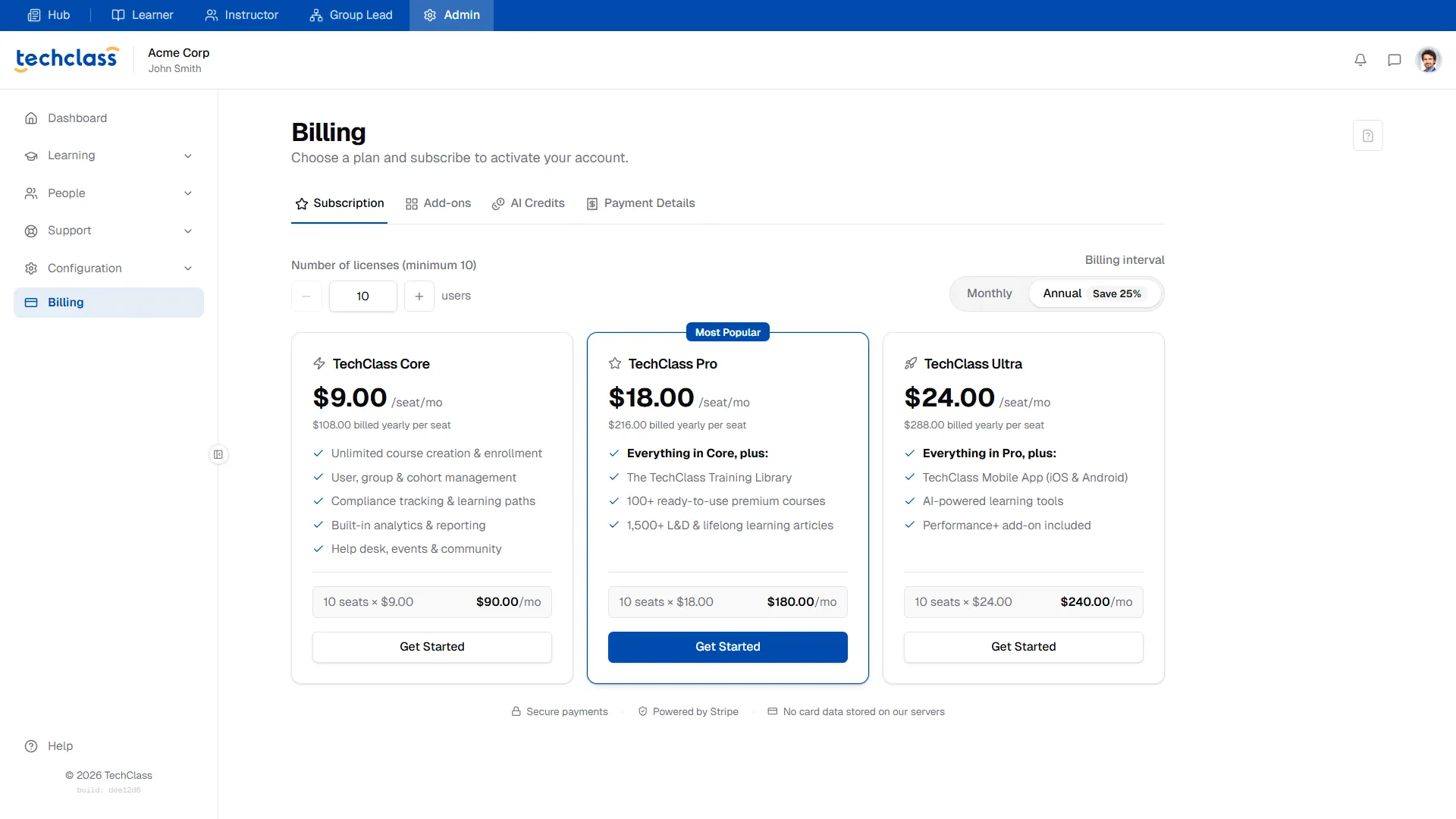
Quote-based pricing made sense when LMS deployments were custom enterprise projects. In 2026, mid-market buyers expect to see pricing on a public page, understand exactly what they get at each tier, and forecast costs as they scale. Vendors hiding behind "contact sales" forms are losing deals before the conversation even starts.
The following table provides a high-level overview of the top learning management systems (LMS) evaluated for 2026, categorized by their optimal use case, availability of trials, and starting market price to facilitate rapid scanning before the deep dive.
Disclaimer: Pricing data is aggregated from public vendor documentation, third-party procurement data, and verified user reviews as of 2026. Enterprise software pricing is highly variable and depends on user volume, contract length, negotiated discounts, and implementation scope. Buyers should always request custom quotes to verify final costs.
We're putting TechClass first because, after evaluating the field, no other platform on this list solves the mid-market squeeze as completely. The remaining nine reviews will explain why each is a strong tool for a specific use case, but each carries a deal-breaker that makes it the wrong choice for a growing mid-market company.
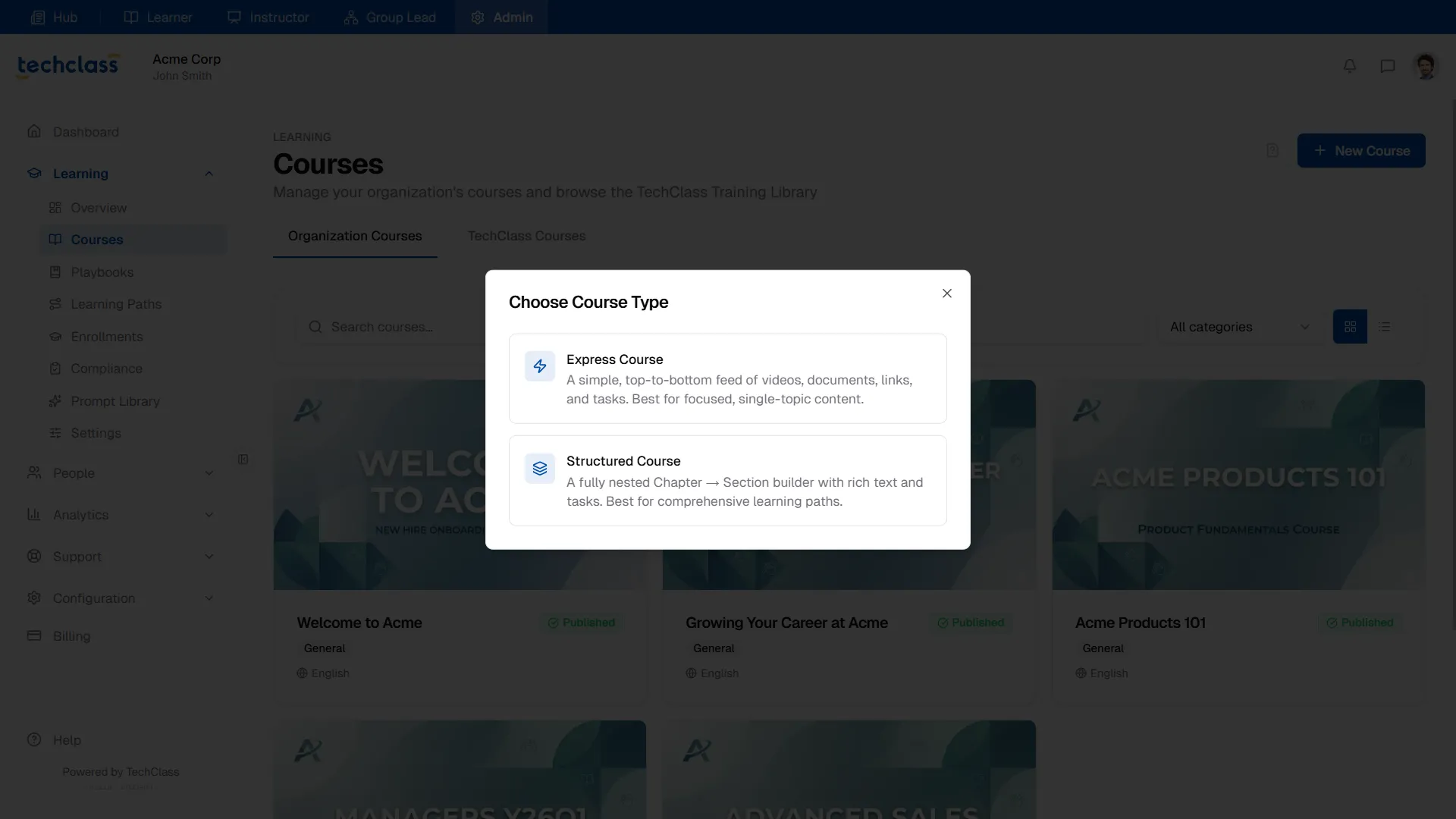
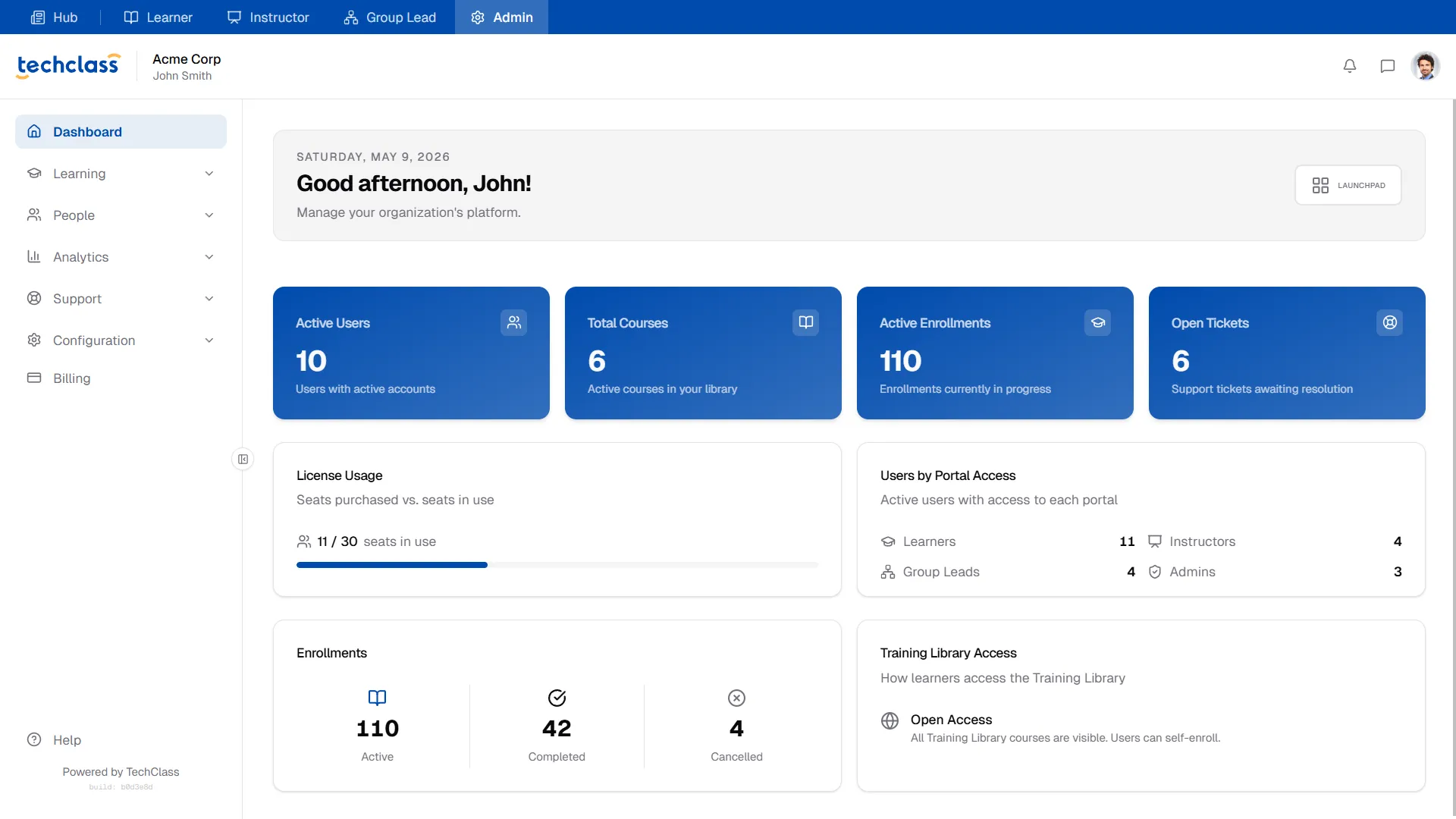
What makes TechClass the right fit for 2026:
Why TechClass beats each major competitor head-to-head:
Verdict: If you are a small or mid-sized business and you want to stop compromising between enterprise power and startup agility, TechClass is the platform built for you.
Docebo is a heavyweight in the enterprise learning sector, praised for its advanced AI algorithms that personalize external academies and complex, multi-audience training environments with robust white-labeling.
Absorb strikes a great balance with intelligent automation, using dynamic enrollment rules to ensure the right employees receive training at the exact moment required to minimize compliance risks.
360Learning flips the traditional model on its head by empowering subject matter experts across the business to collaboratively author and share courses, keeping institutional knowledge agile and relevant.
TalentLMS prioritizes simplicity and speed to deployment. It allows companies to transition quickly from messy spreadsheets to a formalized digital system in days, offering a highly intuitive interface.
LearnUpon is engineered to manage extended enterprise training, allowing administrators to spin up distinct, branded learning portals for internal staff, external partners, and customer bases from one centralized hub.
Cornerstone is a monolithic, enterprise-grade talent management suite unifying learning, performance, succession planning, and workforce intelligence into a single ecosystem with immutable audit trails.
Valamis operates as an end-to-end learning ecosystem, successfully merging the rigid governance of a traditional LMS with the user-centric exploration of an LXP to connect learning directly to business KPIs.
Sana is at the vanguard of AI-native platforms, functioning like an intelligent enterprise search engine combined with rapid content generation to prioritize real-time knowledge discovery over rigid catalogs.
D2L Brightspace brings deep pedagogical structure, advanced assessment rubrics, and detailed competency mapping from its higher-education roots into the corporate enterprise market.
The corporate LMS market in 2026 is polarized. On one end, you have expensive enterprise systems that take half a year to launch and require dedicated administrators. On the other end, basic starter tools that lack the AI, analytics, and security a real business needs to drive outcomes.
For mid-sized businesses, neither extreme works. You need enterprise capability—security, compliance, predictive analytics, AI, combined with startup agility: fast deployment, transparent pricing, and a platform a small team can actually run.
TechClass is the only platform on this list that successfully occupies that middle ground. Every other platform we reviewed is excellent for somebody—but each carries a deal-breaker that makes it the wrong choice for a 30–250 person company.
If you have a mid-sized company and you're tired of compromising between platforms that are too big or too small, the path forward is clear.
For companies with 30–250 employees, TechClass is a strong option to consider. It is designed specifically to bridge the gap between lightweight starter tools and large-scale enterprise software. It provides mid-sized teams with access to advanced AI, analytics, and compliance features, while maintaining rapid deployment and transparent pricing.
Pricing varies significantly depending on the scale and complexity of the platform. Starter platforms for small teams generally begin around $89/month. Mid-market platforms typically range from $8–$15 per user per month with transparent pricing tiers; for example, TechClass starts at $9 per user per month. Larger enterprise platforms generally utilize custom pricing models that can range from $30,000 to over $100,000 annually, depending on user volume and implementation scope.
Implementation timelines depend heavily on the system's complexity and the organization's needs. Large enterprise systems often require several months to over a year for full configuration, integration, and data migration. Mid-market platforms typically take anywhere from a few weeks to two months. TechClass is structured for quick deployment, offering the capability to launch a primary learning environment in 24 hours, supported by an included onboarding session.
This largely depends on the platform you select. Highly complex enterprise systems often require a dedicated administrator or an IT team to manage daily operations and updates. Many modern mid-market platforms, including TechClass, are designed to be managed by lean teams. By using AI-assisted features to help automate enrollments, reporting, and routine tasks, the system can often be managed by an existing HR generalist or a part-time administrator.
Yes, though the depth of compliance capabilities varies widely by vendor. For organizations with strict regulatory requirements, essential features include automated enrollment triggers, certification expiry tracking, detailed audit trails, and the specific security features your compliance LMS needs to satisfy ISO and SOC 2 auditors. TechClass supports these requirements with a secure compliance engine, offering automated tracking, soft-delete audit protocols, and centralized remediation functions to help manage organizational risk.