How Finnish Teacher Education Shapes Lifelong Learners






Finnish teacher education is one of the most inspiring parts of the Finland education system. It does more than prepare people to stand in front of a class. It helps teachers become thoughtful guides, caring professionals, and lifelong learners themselves.
Think of a teacher as a gardener. A gardener does not pull a plant to make it grow faster. A good gardener studies the soil, watches the light, gives water, removes barriers, and waits with care. In many Finnish schools, teachers work in a similar way. They do not only ask, “What should I teach today?” They also ask, “How does this child learn best? What support does this learner need? How can I help this student become curious, brave, and independent?”
This is why many educators, school managers, and visitors from around the world want to understand teacher training in Finland. The Finnish approach is built on high-quality preparation, research, trust, autonomy, and a deep respect for children as active learners. Education Finland describes Finnish teachers as highly educated and respected professionals, and notes that most teachers are required to hold a master’s degree, except early childhood education teachers, whose training is at bachelor’s level.
The result is a school culture where learning is not treated as a short race. It is treated as a lifelong journey. Students learn how to think, ask questions, work with others, solve problems, and reflect on their own progress. Teachers model these habits every day.
What Makes Finnish Teacher Education Special?
To understand Finnish schools, we must first understand Finnish teachers. In Finland, teaching is not seen as a simple job. It is seen as a professional career that needs deep study, careful practice, and strong ethical thinking.
A Finnish teacher is expected to understand subject content, child development, learning methods, assessment, classroom interaction, and student support. This wide preparation helps teachers make wise choices in real time. A classroom is never fully predictable. One child may need silence. Another may need movement. One group may learn best through discussion. Another may need a clear model first. A well-prepared teacher can read these situations and respond with confidence.
Education Finland explains that Finnish teachers have professional freedom. They can decide their teaching methods, materials, and student assessment, and many teachers also take part in local curriculum work and shared decision-making in schools. This matters because teachers are close to students. They see the learners, families, classroom mood, strengths, and needs each day. When teachers are trusted, they can shape learning in a human way.
This trust does not appear by magic. It is built through strong teacher education. Finnish teacher education gives teachers tools to think like professionals. They learn to ask good questions, study learning, use evidence, and improve their own practice.
For a school manager, this is an important lesson. A strong school system cannot depend only on textbooks, tests, or technology. These tools can help, but the teacher is still the heart of the classroom. When teachers are well prepared, students receive better guidance. When teachers are respected, they can focus on learning. When teachers keep learning, students see what lifelong learning looks like in real life.
Lesson 1: Finnish Teachers Are Prepared as Experts, Not Script Readers
In some education systems, teachers are given strict scripts. They are told what to say, when to say it, and how long each task should take. This may create order, but it can also reduce teaching to a routine.
Finland takes a different path. Teachers are prepared as experts who can make professional choices. They are not trained only to follow a lesson plan. They are trained to understand why a lesson works, when it needs to change, and how to help each learner move forward.
This is why master’s-level education is important. A master’s degree is not only a certificate. It is a sign that teachers have studied deeply. They have read research, written academic work, practiced teaching, and learned to connect theory with classroom life. Education Finland states that teachers at all education levels in Finland are generally required to have a master’s degree, except early childhood education teachers, whose training is at bachelor’s level.
This level of preparation gives teachers a strong base. It also sends a message to society: teaching matters. Children deserve teachers who understand learning deeply. Schools deserve professionals who can lead learning with care.
For students, this means their teacher is not just a person who gives information. The teacher is a guide who can plan meaningful learning, notice progress, support challenges, and create a classroom where students feel safe to try.
Imagine a student who is afraid of mathematics. A less prepared teacher may only repeat the rule again and again. A well-prepared teacher may ask: What is the real barrier? Is it number sense? Language? Confidence? Memory? Fear of mistakes? The teacher can then choose a better path. This is how strong teacher education reaches the child.
Lesson 2: Research-Based Teacher Education Builds Thinking Teachers
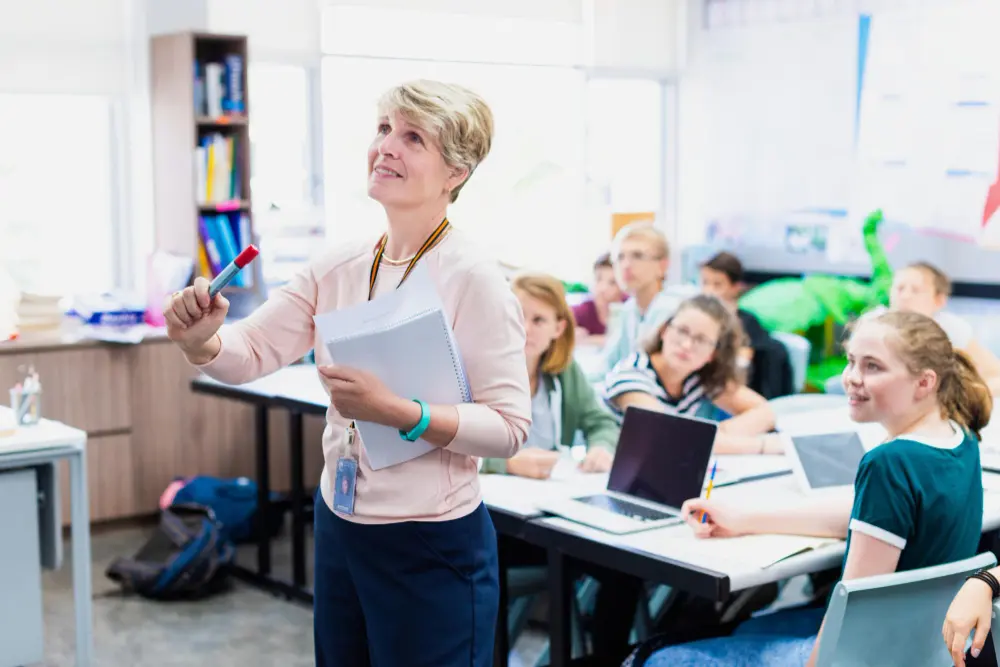
One of the strongest features of Finnish teacher education is its research-based approach. This phrase may sound academic, but the idea is simple. Teachers learn to use evidence, not guesswork. They learn to observe, ask, test, reflect, and improve.
A research-based teacher does not think, “This activity is fun, so it must be good.” Instead, the teacher asks, “What are students learning? How do I know? What should I change next time?” This makes teaching more thoughtful.
Education Finland notes that Finnish teacher education emphasizes the link between teaching and research. The goal is to educate teachers who have a research orientation, can solve problems independently, and can use recent research in education and in the subjects they teach.
This does not mean every teacher becomes a full-time researcher. It means teachers learn to think in a careful and open way. They become classroom investigators. They watch how students respond. They collect signs of learning. They discuss with colleagues. They adjust lessons.
This is powerful because learning is complex. No single method works for every student in every situation. A research-minded teacher can choose wisely.
For example, a teacher may notice that students can repeat facts but cannot explain ideas in their own words. Instead of blaming students, the teacher studies the lesson design. Maybe students need more discussion. Maybe they need visual models. Maybe they need to connect the idea to daily life. The teacher then tries a new approach and watches what happens.
This habit shapes students too. When students see teachers asking questions and improving, they learn that learning is not about being perfect. It is about growing. They learn that mistakes are information. They learn that good thinking takes time.
This is one reason Finnish schools are interesting for international visitors. The visible classroom may look calm and simple. But under the surface, there is deep professional thinking.
Lesson 3: Guided Teaching Practice Connects Theory with Real Life
Good teacher education cannot happen only in lecture rooms. Teachers need real classrooms. They need to work with real children, real questions, and real learning situations. Finland understands this well.
At the University of Helsinki, student teachers complete teaching practice in university teacher training schools. The university describes supervised basic teaching practice and advanced teaching practice as an integral part of pedagogical studies for both class teachers and subject teachers.
This guided practice is very important. A student teacher may understand a theory about motivation, but what happens when a quiet student refuses to speak? A student teacher may know the idea of differentiation, but what happens when five students finish early and three students need help? Practice helps future teachers learn these skills in a safe and guided way.
During teaching practice, student teachers can plan lessons, teach, receive feedback, and reflect. They are not left alone. They are supported by experienced mentors. This makes the learning process stronger.
Think of it like learning to drive. Reading a driving book is useful, but it is not enough. A learner driver needs time on the road with a calm instructor. The instructor does not only say “turn left.” The instructor helps the learner notice traffic, speed, signs, and risks. In the same way, teaching practice helps future teachers notice the living details of classroom life.
This practice also helps future teachers build their professional identity. They begin to ask: What kind of teacher am I becoming? How do I speak to students? How do I create trust? How do I support independence? How do I handle surprise?
For international educators, this is a key insight. Strong teacher education needs a close bridge between university study and school practice. Theory becomes useful when teachers test it, reflect on it, and make it their own.

Lesson 4: Teacher Autonomy Creates Responsive Classrooms
Autonomy is one of the most admired parts of the Finnish school culture. But autonomy does not mean “do anything.” It means teachers have the professional freedom to make wise choices for their students.
Education Finland states that Finnish teachers can decide their own teaching methods, teaching materials, and student assessment. It also notes that many teachers take part in local curriculum work and school-level decision-making.
This freedom helps teachers respond to learners as real people. A teacher may decide to use outdoor learning because the topic fits nature. Another teacher may use group discussion because students need speaking practice. A third teacher may use a project because students are ready to connect several subjects.
This is important for lifelong learning. Students do not become lifelong learners by only memorizing answers. They become lifelong learners when they learn how to explore, reflect, collaborate, and take responsibility. A teacher with autonomy can create these learning moments.
Let us imagine a class studying water. A teacher could simply ask students to read a chapter and answer questions. But an autonomous teacher might design a wider learning experience. Students could test water use at school, interview family members, read a short text about water systems, make charts, and discuss how communities can save water. In this lesson, students learn science, language, mathematics, citizenship, and problem-solving. They also see that learning connects to life.
Autonomy also helps teachers build motivation. When teachers can use their own creativity, they often feel more ownership. This can make teaching more alive. A motivated teacher can create a motivated classroom.
For school leaders, the message is clear. Trust and quality must grow together. If teachers are not well prepared, autonomy may feel risky. But when teachers have strong education, mentoring, and shared goals, autonomy becomes a strength.
Lesson 5: Finnish Teacher Education Supports Student-Centered Learning
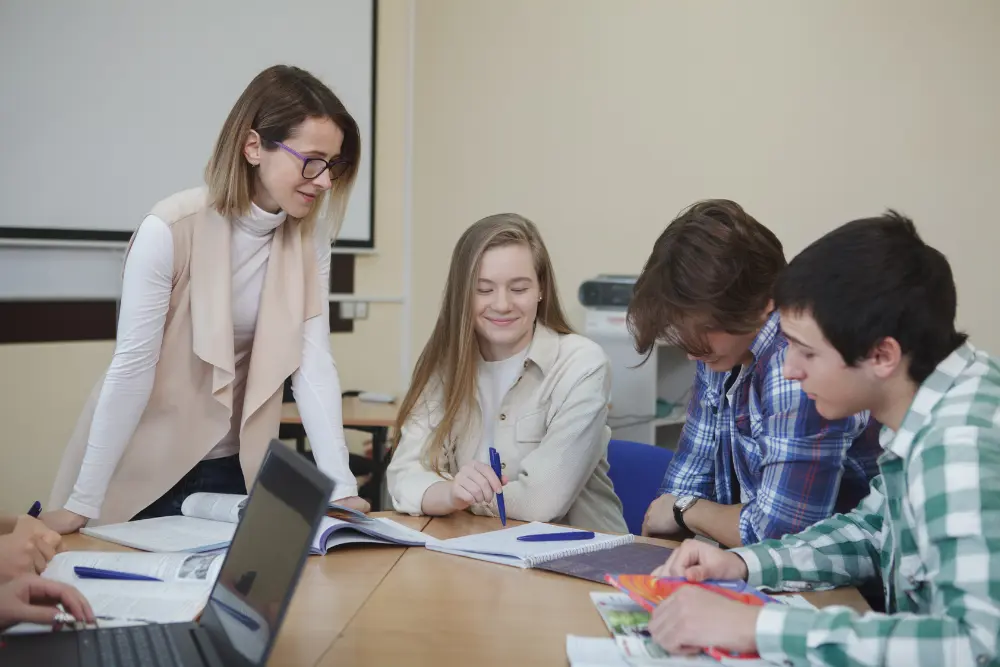
In a student-centered classroom, the teacher is still important. The teacher does not disappear. But the student becomes more active. Students ask, discuss, build, test, explain, reflect, and take part in their own learning.
Finnish teacher education prepares teachers to guide this kind of classroom. The teacher learns how people learn best, how to plan activities, how to assess learning, and how to support individual students. Education Finland describes the core of Finnish teacher training as the question of how people learn best, including planning, activity design, assessment, and individual support.
This is very different from a classroom where students only copy notes. Copying may keep students busy, but it does not always make them think. Finnish classrooms often aim to make learning meaningful. Students are encouraged to connect ideas to life, talk about their thinking, and understand their own learning process.
The Finnish National Agency for Education explains that the national core curriculum aims to increase pupil participation, meaningfulness of learning, and each pupil’s chance to feel successful. Pupils are encouraged to take more responsibility for their schoolwork, set goals, solve problems, and assess their learning based on targets.
This is a strong base for lifelong learning. A lifelong learner is not someone who waits for a teacher to give every answer. A lifelong learner knows how to set a goal, find information, ask for help, test ideas, and reflect.
For example, a teacher may ask students to set a personal goal before a writing task. One student may focus on using clearer sentences. Another may work on adding more details. Another may practice spelling. At the end, students review their work and think about what improved. This simple act teaches self-awareness. It helps students see learning as something they can manage.
For non-native English-speaking educators reading this article, the lesson is practical. Student-centered learning does not require expensive tools. It begins with better questions. What do students already know? What choices can they make? How can they show understanding? How can they reflect on progress?
Lesson 6: Lifelong Learning Skills Are Built into the System
The phrase “lifelong learning” can sound large. But in a classroom, it starts with small habits. Can a student ask a good question? Can they work with others? Can they manage time? Can they learn from feedback? Can they stay curious when work is hard?
Finland’s curriculum gives these skills real importance. The Finnish National Agency for Education explains that the teacher’s task is to instruct and guide pupils into becoming lifelong learners while taking each pupil’s individual learning approaches into account.
This means lifelong learning is not an extra topic saved for special days. It is part of daily school life. Teachers guide students to understand how they learn. They support curiosity, responsibility, and confidence.
The Finnish curriculum also includes transversal competences. These are broad skills that help students in school, work, hobbies, and everyday life. In general upper secondary education, transversal competence areas include well-being, interaction, multidisciplinary and creative competence, societal competence, ethical and environmental competence, and global and cultural competence.
These skills are not separate from subjects. They are woven into learning. A history lesson can build critical thinking. A science lesson can build environmental responsibility. A language lesson can build cultural understanding. A mathematics lesson can build problem-solving and persistence.
This is where teacher education matters again. Teachers need to know how to teach both subject content and wider life skills. It is not enough to say, “Be creative.” Teachers must design tasks where creativity has space. It is not enough to say, “Collaborate.” Teachers must teach students how to listen, share roles, disagree kindly, and reach a shared goal.
Lifelong learning also includes guidance. The Finnish National Agency for Education states that lifelong learning is increasingly important as society changes, and guidance helps people identify their abilities, competences, and interests at different stages of life.
This is a beautiful idea. Learning is not only for children. It is for every age. Teachers, students, parents, and school leaders all keep growing. A school becomes stronger when everyone sees themselves as a learner.
Lesson 7: Collaboration Makes Teachers and Schools Stronger
A strong teacher is important. But a strong school is more than one teacher. Finnish education also values collaboration. Teachers take part in local curriculum work, school decisions, shared planning, and whole-school development.
This is important because learning does not happen in separate boxes. A student’s experience is shaped by many adults, many subjects, and many school routines. When teachers work together, students receive clearer support.
Eurydice describes teacher training in Finland as emphasizing a learner-oriented, research-based, and whole-school approach. It also notes the importance of diverse learning environments, team-teaching, cross-disciplinary approaches, and teachers’ management skills.
A whole-school approach means teachers are not only responsible for their own classroom door. They also help build the school culture. They discuss values, learning goals, assessment, support, and well-being.
For school managers, this is a key point. A school cannot become student-centered if only one teacher changes. The whole school needs shared language and shared aims. Teachers need time to talk. They need space to plan. They need leadership that respects their professional voice.
In Finland, the national core curriculum gives a common foundation, but local schools and municipalities create their own curricula within that framework. The Finnish National Agency for Education explains that the national core curriculum provides a uniform foundation for local curricula, while municipalities and schools shape instruction and schoolwork in more detail based on local needs.
This balance is useful. It gives direction without making every school identical. It is like music. The national curriculum gives the key and rhythm. Local schools play the song in a way that fits their community.
For visiting educators, this can be one of the most interesting things to observe. The Finnish model is not only about classroom techniques. It is also about trust, planning, cooperation, and shared responsibility.
What Educators Around the World Can Learn from Finland
Every country has its own culture, history, resources, and needs. So the Finnish model should not be copied like a recipe. But it can inspire useful questions.
- The first question is: How do we prepare teachers? If teachers are expected to build deep learning, they need deep preparation. Short training alone is not enough. Teachers need subject knowledge, child development, pedagogy, assessment skills, practice, mentoring, and reflection.
- The second question is: Do teachers have trust? Trust helps teachers respond to learners. But trust must be supported by quality education, good leadership, and shared goals.
- The third question is: Do students learn how to learn? A strong education system does not only fill students with facts. It helps them become active learners who can keep growing.
- The fourth question is: Do schools support teacher collaboration? Teachers need each other. A school becomes stronger when teachers plan, reflect, and solve problems together.
- The fifth question is: Is well-being part of learning? Students are not machines. They are human beings. Their emotions, confidence, health, and relationships matter.
These questions can help any school system grow. Even small changes can make a difference. A school may begin by adding more teacher reflection time. A teacher may begin by asking students to set learning goals. A manager may begin by creating peer observation circles. A training provider may begin by linking theory more closely to practice.
The Finnish example is not about perfection. It is about purpose. It shows what can happen when a country treats teachers as key builders of the future.
Finnish Teachers Help Students Learn for Life
Finnish teacher education shapes lifelong learners because it starts with a powerful belief: teachers matter. When teachers are well educated, trusted, supported, and encouraged to keep learning, they can create classrooms where students grow as whole people.
In Finland, teachers are prepared to think deeply about learning. They study research. They practice in real classrooms. They learn to assess with care. They work with colleagues. They guide students toward curiosity, responsibility, confidence, and reflection.
This is why the Finnish approach continues to inspire educators around the world. It shows that learning is not only about today’s lesson. It is about tomorrow’s person.
A lifelong learner is not made in one day. A lifelong learner is shaped through many small moments: a teacher’s question, a safe classroom, a chance to try again, a project that feels meaningful, feedback that builds hope, and a school culture that says, “You can grow.”
To understand this deeply, the best step is to see it in action. If you are a teacher, school manager, education leader, or lifelong learner yourself, a school visit in Finland can give you a clear view of how these ideas live inside real classrooms.
Book a Finnish school visit with TechClass and experience how Finland’s inspiring education culture helps teachers and students learn for life.
Frequently asked questions
What qualifications do Finnish teachers need?
According to Education Finland, teachers at all levels are generally required to hold a master's degree, with the exception of early childhood education teachers, whose training is at the bachelor's level. This deep preparation signals that teaching is treated as a respected expert profession.
What does 'research-based' teacher education mean in Finland?
It means teachers are trained to use evidence instead of guesswork, acting as classroom investigators who observe how students respond, reflect, and adjust their lessons. The goal, per Education Finland, is teachers who can solve problems independently and apply recent research in education and their subjects.
How does Finnish teacher education promote lifelong learning in students?
Teachers guide students to set goals, solve problems, reflect, and assess their own progress, making lifelong learning part of daily school life rather than a special topic. The curriculum also weaves in transversal competences like well-being, interaction, and ethical and environmental skills across all subjects.