How Finland's Education System Became a Global Benchmark






Why the Finland Education System Continues to Inspire the World
What does it take for a small Nordic country to become one of the most respected education systems in the world?
The Finland education system has earned its reputation as a global benchmark not through loud promotion, but through quiet, consistent excellence. Educators, researchers, school leaders, and policymakers from across the globe travel to Finland each year. They do not come to see impressive buildings or complex testing systems. They come to understand a philosophy. They come to witness a culture of trust. They come to experience a system that places children, teachers, and learning at the center of everything.
Education in Finland is often described as balanced, humane, research-driven, and equitable. But those words only begin to explain its impact. To truly understand how the Finnish education model became internationally admired, we must look deeper. We must examine its values, its structure, its teacher preparation, its classroom practices, and its long-term vision.
This article explores in detail the powerful foundations of the Finland school system. You will discover why teacher training in Finland is so highly respected, how student-centered learning shapes everyday classroom life, and why global visitors consistently describe Finnish schools as inspiring and transformative.
Let us explore how the Finland education system became a global benchmark for excellence.
1. A Strong National Vision Rooted in Equality and Trust
At the heart of the Finland education system lies a clear and unwavering national commitment: every child deserves equal access to high-quality education. This belief is not symbolic. It is structural. It shapes funding decisions, curriculum design, teacher preparation, and classroom practices.
Education in Finland is publicly funded and accessible to all. There are no elite public schools that dominate the system. Instead, the goal is that every school should be equally strong. Whether a student attends school in Helsinki or in a remote rural village in Lapland, the quality of education should remain consistent.
This commitment to equity reflects a broader social value in Finland: fairness strengthens society. When all children receive strong educational foundations, the entire country benefits. Economic growth, social cohesion, and innovation are built on this shared belief.
Trust also plays a powerful role in the Finnish education model. Trust exists between the government and schools. It exists between principals and teachers. It exists between teachers and students. There is no heavy inspection culture. There is no constant external monitoring. Instead, there is confidence in professional competence.
Imagine a school environment where teachers are not constantly proving themselves through test results. Imagine students learning without constant comparison. This culture of trust creates calmness. It reduces anxiety. It allows energy to focus on meaningful learning rather than performance pressure.
It is this foundation of equality and trust that sets the Finland education system apart.

2. Highly Selective and Research-Based Teacher Training in Finland
If equality is the heart of the Finland education system, then teachers are its backbone.
Teaching in Finland is not simply a job. It is a respected profession that attracts talented, motivated individuals. Admission to teacher education programs is highly competitive. Universities carefully select candidates based not only on academic achievement but also on communication skills, motivation, and interpersonal ability.
All teachers in Finland are required to complete a master’s degree. This requirement ensures deep subject knowledge and strong pedagogical understanding. Teacher training in Finland is rooted in research. Students study educational psychology, curriculum theory, child development, and classroom research methods. They learn to evaluate evidence. They learn to reflect critically. They learn to design effective learning experiences.
Future teachers also complete extensive teaching practice in university-affiliated training schools. These environments function as living laboratories where theory meets practice. Student teachers observe experienced educators. They test lesson plans. They receive detailed feedback. They refine their approach.
This rigorous preparation builds professional confidence. When teachers graduate, they are not simply implementing instructions from above. They are educational experts capable of making informed decisions.
According to the OECD, Finland’s strong teacher preparation and professional autonomy are central to its education success (OECD Education Overview – Finland: https://www.oecd.org/education/).
Once in the classroom, Finnish teachers are granted autonomy. They adapt national curriculum guidelines to local contexts. They design lessons that respond to their students’ needs. They collaborate with colleagues to improve practice. This professional trust encourages innovation and long-term commitment to the profession.
It is no surprise that teaching remains one of the most respected careers in Finland. The Finland school system understands that quality education begins with quality teachers.
3. Equity in Action: Comprehensive Support Systems for Every Student
The Finland education system is often praised for its fairness. But fairness is not simply about free tuition. It is about removing obstacles that prevent students from learning.
In Finland, education is free at every level, including higher education. However, support goes far beyond tuition. Students receive free school meals each day. Learning materials are provided. Transportation is arranged for those who live far from school. School health services are integrated into daily life.
These measures ensure that family income does not determine educational opportunity.
The Finnish education model also emphasizes early intervention. Teachers monitor student progress carefully. If a child begins to struggle, support is provided quickly. Special education teachers collaborate closely with classroom teachers. Small-group instruction, individualized plans, and targeted strategies are common.
This proactive approach prevents minor challenges from becoming major obstacles. It also reinforces the message that every student is valued.
Consider how powerful it is for a child to know that help will arrive before failure becomes permanent. This culture of support builds confidence and resilience.
Equity within the Finland school system is not about lowering standards. It is about raising support so that all students can reach high standards.
4. Student-Centered Learning and Meaningful Assessment
In many countries, classrooms revolve around textbooks and exams. In the Finland education system, classrooms revolve around students.
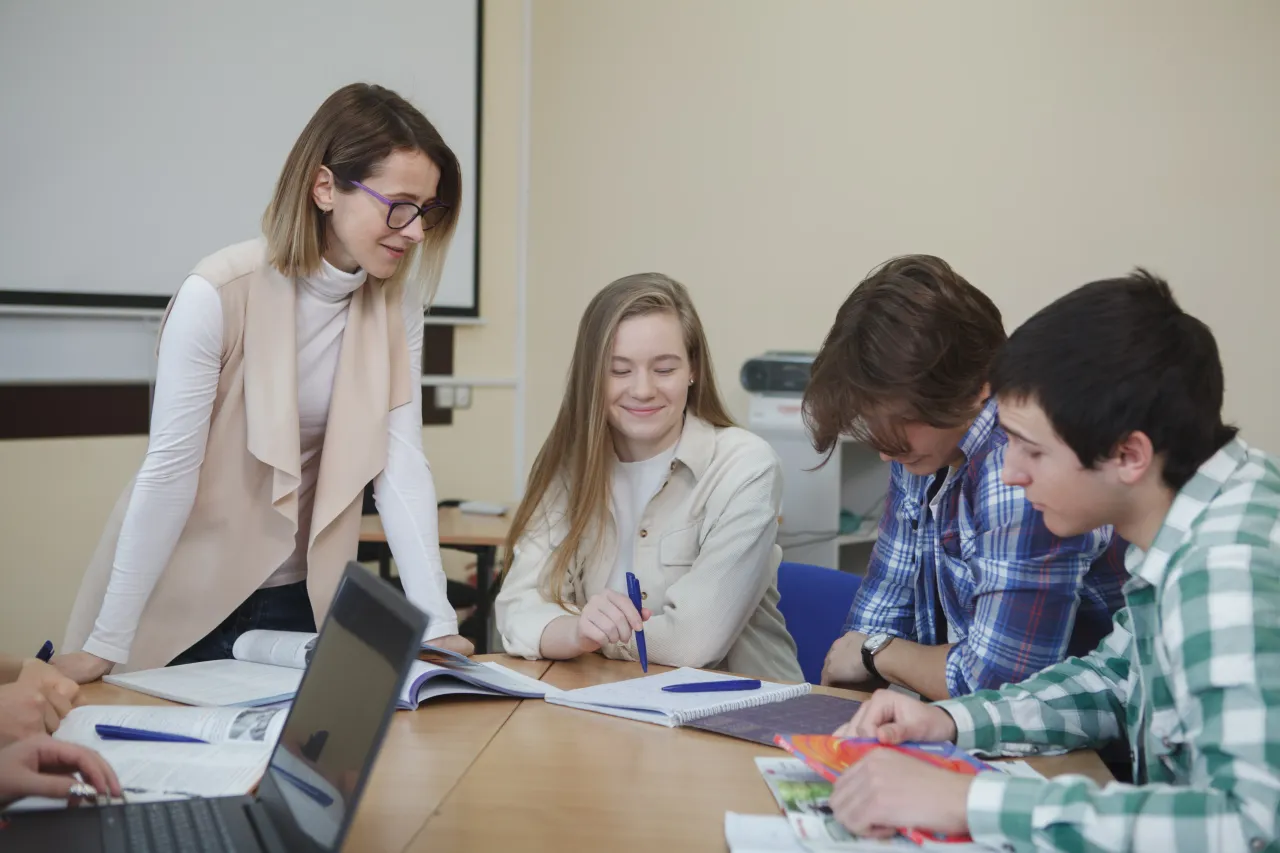
Learning in Finland is designed to be active, collaborative, and meaningful. Students are encouraged to ask questions, explore ideas, and engage in discussions. Teachers guide rather than lecture. Classrooms often feature flexible seating, group work areas, and open dialogue.
Student-centered learning in Finland emphasizes deep understanding rather than surface memorization. For example, in science classes, students conduct experiments and analyze results. In language classes, they create stories and engage in real-world communication. In social studies, they debate issues and explore multiple perspectives.
Assessment within the Finnish education model is primarily formative. Teachers observe learning progress, provide constructive feedback, and adjust instruction accordingly. National standardized tests are limited. The focus remains on continuous improvement rather than ranking.
This approach reduces stress. It encourages intrinsic motivation. Students learn because they are curious and engaged, not because they fear exams.
The Finland education system demonstrates that meaningful learning flourishes when students feel ownership of their education.
5. Balanced School Days and Emphasis on Well-Being
Another defining feature of education in Finland is balance.
Students often have shorter school days compared to many other countries. However, instructional time is used efficiently. Frequent breaks allow students to rest and recharge. Outdoor play is common, even during cold weather.
Research supports this approach. Regular breaks improve concentration and memory. Outdoor activity enhances physical and mental health. Finnish schools understand that learning is connected to well-being.
The Finland education system integrates student welfare services directly into schools. Counselors, psychologists, and nurses are available. Teachers collaborate with support staff to ensure that students receive emotional and social guidance when needed.
Bullying prevention programs are carefully implemented. Schools prioritize safe and inclusive environments. Respect is taught through daily interaction.
When students feel safe, respected, and supported, they are more open to learning. Academic excellence and emotional well-being are not separate goals. They are interconnected.
6. Innovation and Future-Oriented Learning
The Finnish education model does not remain static. It adapts to global change.
Phenomenon-based learning represents one example of innovation. Instead of studying subjects in isolation, students explore interdisciplinary themes. A topic like climate change might integrate science, geography, mathematics, and language arts. This approach mirrors real-world complexity.
Digital literacy is embedded throughout the curriculum. Students learn coding, responsible technology use, and critical media analysis. Technology is not introduced as an isolated subject. It is integrated meaningfully.
Innovation in Finnish schools also extends to classroom design. Many schools feature open learning spaces, flexible furniture, and technology-supported collaboration.
This forward-thinking mindset ensures that students graduate with skills relevant to modern society. Critical thinking, creativity, communication, and collaboration are emphasized.
The Finland education system demonstrates that innovation thrives when supported by strong foundations.
7. Global Recognition and the Value of School Visits in Finland
The Finland education system has become a global benchmark because its practices produce consistent, observable results. International delegations frequently visit Finnish schools to observe classroom practices, speak with educators, and understand curriculum implementation.
However, reading reports is not the same as witnessing learning in action. Standing inside a Finnish classroom reveals subtle but powerful dynamics: respectful student-teacher interaction, calm learning environments, thoughtful lesson pacing, and authentic student engagement.
School visits in Finland offer educators practical insights. Visitors can ask questions directly. They can observe how teacher training translates into classroom practice. They can see how equity and trust shape daily routines.

Experience the Finland Education System First-Hand with TechClass
Understanding the Finland education system intellectually is valuable. Experiencing it personally is transformative.
TechClass, an eLearning provider based in Finland, specializes in organizing professional school visits. Through structured programs, educators and school leaders can observe real Finnish classrooms, engage with teachers and principals, and participate in professional workshops.
These visits are designed to be interactive and reflective. Participants do not simply watch lessons. They discuss philosophy. They analyze practice. They explore adaptation strategies for their own contexts.
By witnessing the Finnish education model firsthand, visitors gain insights that cannot be captured fully through reading alone.
If you are curious about education in Finland and wish to explore how its principles could inspire your own institution, a school visit provides a powerful opportunity.
A Global Benchmark Built on Vision, Trust, and Human-Centered Learning
The Finland education system became a global benchmark not by accident, but through deliberate choices.
It chose equity over competition.
It chose trust over control.
It chose professional autonomy over rigid accountability.
It chose well-being alongside academic rigor.
These choices created a balanced, innovative, and respected education model.
For teachers, school managers, policymakers, and anyone passionate about learning, the Finnish education model offers both inspiration and practical insight.
If you wish to experience this globally admired system in action, consider booking a professional school visit through TechClass. Discover firsthand how the Finland education system continues to shape the future of education worldwide.
The most powerful understanding begins not just with reading, but with seeing.
Frequently asked questions
Why is teacher training in Finland considered so important to its success?
Teaching is a respected, competitive profession in Finland, and all teachers complete a research-based master's degree covering pedagogy, psychology, and child development plus supervised practice. This rigorous preparation lets teachers act as autonomous experts who design lessons and make informed decisions rather than just following top-down instructions.
How does Finland make education equitable beyond just free tuition?
Education is free at every level, but support goes further with free daily school meals, learning materials, transportation, and integrated school health services. Early intervention and close work between special education and classroom teachers ensure struggling students get help before small challenges become major obstacles.
What does student-centered learning look like in Finnish classrooms?
Classrooms emphasize active, collaborative work where teachers guide rather than lecture, and students ask questions, run experiments, and debate ideas for deep understanding. Assessment is mainly formative with limited standardized testing, which reduces stress and supports intrinsic motivation.