Happiness in Education: What Finland Teaches About Joyful Learning






Picture two classrooms.
In the first, the teacher asks a question. A student looks down. They know the answer, but they stay quiet. They are not lazy. They are not disrespectful. They are simply afraid of being wrong. Their brain is not focused on learning. Their brain is focused on protecting them from embarrassment.
In the second classroom, the teacher asks a question. A student answers, but the answer is not correct. The teacher nods and says, “That’s an interesting idea. Let’s test it together.” The student does not freeze. They do not shut down. They try again. The classroom feels safe enough for learning to happen.
This difference is not small. It is huge. It changes participation. It changes motivation. It changes confidence. And over time, it changes outcomes.
Joyful learning is not about turning every lesson into a game. Joyful learning is about building an environment where students can take learning risks without fear. It is about making learning emotionally possible. When students feel safe, they ask more questions. When they ask more questions, they understand more deeply. When they understand more deeply, learning becomes satisfying. That satisfaction is a quiet form of joy.
Finland’s strength is that it takes these human realities seriously. Finnish schools often aim for a school day that supports attention, relationships, and steady progress. A child is not expected to learn well while feeling unsafe. A teacher is not expected to support children well while feeling constantly mistrusted. When wellbeing is protected, learning can breathe.
What “Happiness” Looks Like in Finnish Schools
It is easy to misunderstand the word “happiness.” Some people imagine happiness means there is no challenge. But in Finnish schools, challenge still exists. Students still work hard. They still concentrate. They still practice. The difference is that the challenge is designed to be manageable, and the school culture aims to protect students’ dignity while they grow.
In many Finnish schools, happiness is not loud. It is calm. It shows up as confidence. It shows up as students who are willing to speak, even if they are not sure. It shows up as a teacher who uses a steady voice and clear routines so students know what to expect. It shows up as learning that feels meaningful rather than rushed.
This matters because children do not learn best in a constant state of stress. They learn best when they have a sense of stability. Stability helps the brain focus. Stability helps students trust the process. Stability helps students keep trying.
Finnish schools often create this stability by paying attention to the whole learning environment: classroom tone, school routines, student support, teacher preparation, and the rhythm of the day. It is not one magic method. It is many small decisions pointing in the same direction.
Trust: The Hidden Power Behind Joyful Learning
If you want to understand why Finnish classrooms often feel calm and focused, start with one word: trust. Trust is not a soft concept. In education, trust is a working tool. It shapes how teachers teach, how students behave, and how schools communicate with families.
In Finland, teacher professionalism and autonomy are strongly linked to trust. Research on Finnish teacher education and autonomy highlights how rigorous, research-informed teacher preparation supports teachers’ ability to make good professional decisions, and how trust in teachers strengthens their autonomy and agency. This trust does not remove structure. It creates a different kind of structure, one where people feel respected rather than controlled.
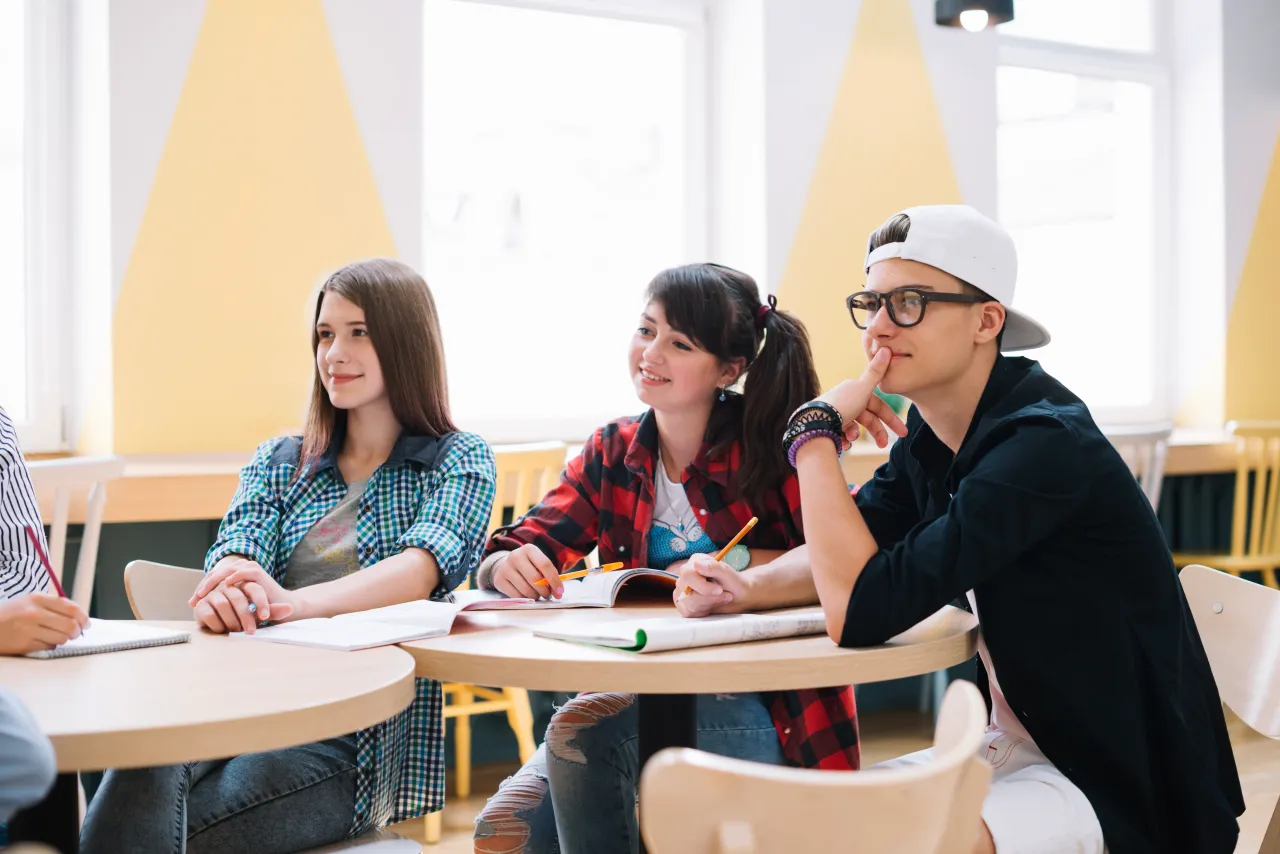
In a trust-based classroom, the teacher does not need to “win” against students. The teacher leads learning with confidence, clarity, and relationship. Students learn that the classroom is a safe place to participate. They learn that the teacher’s goal is not to catch them doing something wrong, but to help them move forward. Over time, this creates a calmer learning climate, because many behavior problems become smaller when students feel respected.
Trust also works between schools and families. When families believe schools are acting with care, cooperation becomes easier. When schools treat families as partners, children feel more secure. That security supports learning because children can focus on the task in front of them instead of worrying about conflict between adults.
Teacher Quality and Autonomy: Why the Teacher’s Role Feels Different
Teachers are central to joyful learning. A student’s daily experience of school is shaped more by the teacher than by any document or policy. Finland invests in teachers not only by training them, but by trusting them to use their training.
In Finland, teacher education is widely described as rigorous and research-based, and many sources note that teachers typically complete master’s-level preparation (with specific pathways depending on role). This matters because research-based training encourages teachers to think deeply about learning, not just deliver content. Teachers are prepared to ask, “What will help this student learn?” rather than “How do I finish this page?”
Teacher autonomy then allows teachers to respond to what they see. Autonomy means a teacher can adjust the lesson when students need more time, change the approach when something is not working, or design learning experiences that fit the class’s needs. Autonomy supports joy because it reduces unnecessary pressure. Instead of teaching like a machine, teachers can teach like humans, and students can learn like humans.
There is another important detail here: autonomy is not loneliness. In a healthy professional culture, teachers learn from each other. They plan together, discuss learning challenges, and share strategies. When teachers have professional support, they can stay patient, creative, and emotionally present. That teacher calmness becomes student calmness. In many schools, this is how joy spreads: from adult wellbeing to child wellbeing.
The National Core Curriculum: A Shared Foundation With Local Freedom
Joyful learning is also supported by how Finland organizes its curriculum. Finland has a national core curriculum that provides a common foundation, while local education providers and schools develop their own local curricula based on it. This approach can support both equality and flexibility: a shared direction, but room for local needs and classroom-level decisions.
This balance matters for happiness because it reduces confusion. Teachers know the overall goals and values, but they are not forced into one narrow teaching style. Schools can design learning in a way that fits their students and community. When curriculum work is treated as a foundation rather than a cage, teachers can focus on real learning instead of constant compliance.
Finland’s curriculum thinking has also attracted global interest for how it encourages cross-curricular learning. Phenomenon-based learning, for example, was introduced into the Finnish core curriculum context and has been studied and discussed internationally. At its best, this type of learning can feel meaningful because students connect knowledge across subjects and link learning to real-world themes. Meaning is a strong ingredient of joy. When students understand why they are learning something, motivation rises.
Student Wellbeing: The Soil Where Learning Grows
Many education systems talk about achievement as if it exists separately from feelings. But children are not machines. Stress changes attention. Fear changes memory. Exhaustion changes behavior. Wellbeing is not an extra layer added on top of learning. Wellbeing is the base layer that makes learning possible.
Finnish schools often support student wellbeing through school culture, daily routines, and practical supports. A clear example is school meals. The Finnish National Agency for Education explains that children and young people in pre-primary, primary, lower secondary, and upper secondary education can enjoy a free school meal, and that a large number of pupils and students are entitled to free school lunch. Other authoritative case materials also describe free school meals as part of Finland’s model, emphasizing that meals support the school day and can be connected to wellbeing and learning.
Why does this matter for joy? Because hunger makes learning harder. Because a shared meal can build community. Because predictable daily support reduces anxiety. When students know basic needs are met, school feels safer.
Wellbeing also shows up in the way adults speak to students, the way help is offered, and the way school time is structured. A child’s happiness is not built only through “special events.” It is built through daily stability.

Inclusive Support: Making Help Feel Normal
A joyful school is not one where everyone learns at the same speed. A joyful school is one where different learners can still feel confident and valued.
In inclusive school cultures, support is not a shameful label. It is a normal tool. When support is normalized, students do not think, “I am bad at school.” They think, “I need help with this right now, and that is okay.” That mindset protects motivation. And motivation is the engine of learning.
In practice, inclusion means many small choices: a teacher noticing early signs of struggle, a school offering support without waiting for failure to become severe, and adults speaking about learning differences with respect. It also means designing classroom routines that allow students to ask for help quietly, so they do not feel exposed.
The emotional side matters here. Students who feel embarrassed will often hide confusion. Students who feel safe will ask questions. That is why inclusion is not only ethical; it is practical. It leads to better learning behaviors.
Feedback That Builds Courage: Formative Assessment as a Joy Builder
Many students fear assessment because assessment can feel like judgment. But feedback can also feel like guidance. This is where formative thinking becomes powerful: it helps students learn during the journey, not only at the end.
Joyful feedback does not pretend everything is perfect. It tells the truth in a way that supports growth. It makes the next step clear. It protects dignity. A student who understands the next step feels hope. A student who feels hope keeps trying.
In practical terms, this means teachers can use language that invites improvement. Instead of “wrong,” the message becomes “not yet.” Instead of “you failed,” the message becomes “let’s try a different strategy.” This small shift can change the emotional atmosphere of a classroom.
Over time, a classroom that treats mistakes as information creates learners who are more resilient. Resilience is a form of happiness because it gives students a sense of control. They learn that difficulties are temporary, and progress is possible.
Meaningful Learning: When School Feels Real
Joy grows when learning feels meaningful. If learning feels disconnected from life, many students stop caring. They may still behave. They may still complete tasks. But the learning energy becomes weak. The student is present, but not truly engaged.
Finnish education ideas are often admired because they support learning that feels connected: connected to real questions, real skills, and real life. This does not mean every lesson is a project. It means teachers pay attention to relevance. They help students understand why a topic matters and how it connects to the world.
Meaning is also supported when students have some ownership. Ownership does not require huge freedom. Even small choices, choosing a topic for a writing task, choosing a way to present learning, choosing a partner for discussion, can increase motivation. When students feel respected, they invest more of themselves. And when students invest more of themselves, learning feels satisfying.
This satisfaction is a quiet kind of joy. It is the feeling a student has when they solve something they thought they could not solve. It is the feeling of “I did it.” Schools that support these moments build confident learners.

Time, Breaks, and the Rhythm of the Day
One of the most talked-about features of Finnish school life is the rhythm of learning and breaks. Many visitors notice that the school day feels structured, but not rushed. The rhythm includes time for focus and time for rest.
There are widely shared descriptions of the Finnish school day where lessons are often organized in 45-minute blocks with regular breaks (often described as 15-minute recess), sometimes called “välkkä.” While schedules vary by school and age level, the larger idea is consistent: breaks are not treated as a reward that students must earn. Breaks are treated as a normal part of how children maintain attention.
Why does this support joy? Because the brain gets tired. Because children need movement. Because short resets can prevent emotional overload. When students have a chance to breathe, the classroom becomes calmer, and learning becomes more sustainable.
It also supports social wellbeing. Breaks are time for peer relationships, which are a huge part of school happiness. A student who feels connected to peers is more likely to feel they belong. Belonging supports participation. Participation supports learning.
Nature and Outdoor Time: Calm Energy That Supports Learning
Finland is known for its relationship with nature, and many schools value outdoor time. Outdoor moments can support learning in a way that is hard to describe until you see it. Nature reduces mental noise. Fresh air changes energy. Movement changes mood. And mood changes learning.
Outdoor learning does not need to be complicated. It can be as simple as reading outside for a few minutes, observing the environment for science, or using a schoolyard for physical activity and play. What matters is that outdoor time gives students a different kind of space. It helps them reset. It helps them return to the classroom ready to focus.
For many visitors, this is one of the most memorable elements of Finnish school life: children outside in different weather, treating outdoor time as normal. This normality sends a message to students: your body matters, your energy matters, and school is not only about sitting still. That message supports happiness.
Calm Classrooms: The Power of Quiet Confidence
Some people mistakenly think calm classrooms are boring. But calm is not boredom. Calm is readiness. Calm is focus. Calm is emotional safety.
Many Finnish classrooms are described as calm because students know what to do, and teachers lead with steady confidence. Calm classrooms often have clear routines. Students know how to start. They know how to ask for help. They know what happens next. This predictability reduces anxiety, and less anxiety means more mental space for learning.
Quiet can also be positive. Quiet can mean students are thinking. Quiet can mean students are reading. Quiet can mean students are working independently. In a classroom where quiet is safe, students do not fear silence. They use it. They learn to focus.
This is an important lesson for any school: loudness is not the only sign of engagement. Some of the deepest learning happens when students have time to think without pressure.

Digital Focus and Learning Attention
Modern schools everywhere face a challenge: distraction. Devices can support learning, but they can also interrupt attention and social interaction if boundaries are unclear.
Finland has also taken steps in this area. Reporting in 2025 described new restrictions around mobile phone use during the school day, aiming to support concentration and calm learning environments (with implementation details set to take effect on August 1, 2025). Regardless of the exact policy details in any single school, the positive principle is clear: attention matters, and school is also a place for interaction, not only screen time.
For joyful learning, attention is a precious resource. When students can focus, they experience success more often. When they experience success, their confidence grows. And when confidence grows, learning feels better.
A Practical Picture: What a Visitor Might Notice in a Finnish School
If you visit a Finnish school, you may notice many small details that together create a big feeling. You may notice that teachers speak in a steady tone. You may notice that students move around the school with calm energy. You may notice that support does not feel like punishment. You may notice that school life is structured, but the structure feels human.
You may also notice that learning spaces are often designed for real work: spaces for discussion, spaces for quiet tasks, spaces for hands-on learning. The environment supports different learning modes. When students can learn in more than one way, more students can feel successful. And success is one of the most reliable sources of joy.
Most importantly, you may notice that the atmosphere often feels respectful. Respect does not mean no boundaries. Respect means boundaries are delivered with dignity. That dignity protects student self-worth. And self-worth is closely connected to happiness.
What Teachers Can Learn and Apply Without Copying Finland
It is important to say this clearly: you do not need to become Finland to learn from Finland. Every school system has a different culture, schedule, and set of resources. But joyful learning is not tied to one country. It is tied to human needs. And many of Finland’s strengths are human strengths: trust, respect, routines, and meaningful learning.
One practical takeaway is the power of language. The way a teacher responds to mistakes can either shut down learning or open it up. If you want more joy, start by protecting dignity. When a student struggles, speak in a way that shows belief: “Let’s find the next step.” When a student makes a mistake, respond in a way that keeps courage alive: “Interesting idea, let’s test it.” Over time, students learn that effort is safe.
Another takeaway is the power of routines. Joyful classrooms are often predictable classrooms. Predictability reduces anxiety. Anxiety is expensive for the brain. When anxiety goes down, attention goes up. You can build predictability through small habits: a consistent opening routine, a clear way to ask for help, a steady closing reflection. These routines do not remove creativity. They create a safe structure where creativity can happen.
Finally, joyful learning grows when students feel learning has meaning. Even if you cannot redesign your curriculum, you can make one lesson a week feel more connected to life. Ask a real question. Use a real example. Invite students to explain ideas in their own words. The point is not perfection. The point is progress.
What School Leaders and Managers Can Learn From Finland
School culture is not built only by classroom teachers. It is also built by leadership. Teachers can create joy more easily when they work in a system that supports them.
Finland’s teacher autonomy is often discussed as a strength, and autonomy is easier to maintain when leadership is trust-based. Trust-based leadership includes listening, clarity, and professional respect. It includes giving teachers meaningful professional development, not endless paperwork. It includes focusing on student support rather than blame. It includes setting goals that are ambitious but realistic.
Leaders can also protect joy by protecting time. Time for teacher collaboration. Time for planning. Time for student support. Time for breaks. Time for reflection. When time is protected, stress decreases, and learning quality increases.
Another leadership lesson is to make wellbeing visible in systems. Wellbeing is not only a counselor’s responsibility. It is part of schedule design, support systems, staff culture, and communication norms. When leaders treat wellbeing as a shared responsibility, the whole school becomes more stable.
A Reliable External Source to Explore Further
If you want an official, authoritative place to explore Finland’s education structures and resources, the Finnish National Agency for Education provides accessible information, including curriculum foundations and school practices. Use this external link in your blog: https://www.oph.fi/en
Why Seeing Finland in Person Can Be a Turning Point
Reading about Finland can inspire you. But visiting Finland can transform how you understand education.
When you visit a school, you notice what cannot be captured fully in writing: the tone of voice, the rhythm of the day, the way students move, the way teachers guide, the way support is offered without drama, and the way learning spaces shape behavior. You see how joy can exist without chaos. You see how calm can exist without boredom. You see how structure can exist without fear.
Many visitors arrive expecting a “perfect system.” What they often discover is something more useful than perfection: a human system. A system designed to support real children and real teachers. A system that treats learning as a long journey rather than a short race.
And once you see that, you start asking new questions back home: What can we change in our routines? What can we change in our language? What can we said differently tomorrow? What can we protect in our schedule? What kind of classroom atmosphere do we want to create?
This is the value of a school visit: it turns abstract ideas into practical understanding.
Conclusion: Joyful Learning Is Strong Learning
Finland teaches a hopeful lesson: learning can be serious without being scary. Standards can exist without harshness. Structure can exist without fear. Teachers can lead with authority and still be kind. Students can work hard and still feel safe.
When trust is strong, classrooms become calmer. When support is normal, students stay motivated. When routines are steady, anxiety decreases. When learning feels meaningful, motivation rises. When breaks and movement are respected, focus improves. When dignity is protected, courage grows. And when courage grows, learning becomes joyful.
This is not a fantasy. It is a set of choices. Small choices, repeated daily, building a school culture where children can thrive.
Book a Finnish School Visit With TechClass
If you want to experience Finland’s joyful learning culture in real classrooms, TechClass can help you do it in a meaningful and well-organized way.
TechClass is an eLearning provider in Finland, and we also arrange guided school visits in Finland for teachers, school managers, education leaders, and school groups. These visits help you observe Finnish classroom practices, understand school culture, and bring practical ideas back to your own learning community.
Book a school visit with TechClass and experience Finland’s approach to joyful learning in person, inside real schools, with real educators, in real daily life.
Frequently asked questions
Does 'happiness' in Finnish schools mean there is no challenge or hard work?
No. Students still work hard, concentrate, and practice, but the challenge is designed to be manageable and the school culture protects students' dignity as they grow. Happiness shows up as calm confidence and stability rather than the absence of effort.
Why does the article emphasize trust so much?
It presents trust as a practical working tool, not a soft idea. Trust in teachers strengthens their professional autonomy and agency, creates calmer classrooms where students feel safe to participate, and extends to families so children can focus on learning instead of worrying about conflict between adults.
Why are breaks and outdoor time treated as important rather than rewards?
Because the brain gets tired and children need movement and resets to maintain attention. The article describes lessons often organized in 45-minute blocks with regular breaks (often around 15 minutes), and notes that breaks and outdoor time support focus, social belonging, and sustainable learning rather than being privileges to earn.