A practical Work-integrated Learning (WIL) program for people building health technology products, software, devices, and services. Learn to run the whole development journey, from idea to a tested, evaluated solution, in a regulated and patient-safety-driven environment.
Health technology product development is not ordinary product development: a
solution that touches patients, clinicians, or care data has to be safe, usable
in real workflows, well documented, and aware of regulation from the first idea.
This program gives developers, entrepreneurs, and specialists a clear, practical
map of that whole journey, from fundamentals and user needs to concept, data
and technology, and a tested, evaluated solution.
It runs alongside your work. Each of the five modules is a standalone 27-hour
unit, so you can take the full pathway or only what you need. You apply every
module to a real case of your own, work with trainers, peers, and health
technology experts, and leave with a practical product development plan.
Expert-led lectures and keynotes
Live Q&A Sessions
Practical Work-integrated Learning (WIL)
Exercises, self-study, and feedback
Upon completing the program, you will receive a certificate demonstrating your up-to-date expertise.
Content
Module 1
Fundamentals and Operating Environment
How health technology product development works end to end, and why it is not ordinary product development. A solution that touches patients, clinicians, or care data carries requirements from the first idea, so this module sets the map you follow through the rest of the program.
In this module you will learn:
The field, productization, and the operating environment you are building in.
How to structure the development process and lifecycle for your own idea, product, or service.
Regulation, patient safety, quality, and documentation as everyday design inputs rather than late-stage obstacles.
Module 2
User, Customer, and Need Discovery
How to find the real need before you build anything. You work across patients, clinicians, care organizations, and buyers to define a development target you can defend, rather than starting from an assumption about what people want.
In this module you will learn:
Needs across patients, clinicians, care organizations, and buyers.
How to turn those needs into a clear development target.
How to work from evidence instead of building on assumptions.
Module 3
Service Design and Concept Development
How to turn an identified need into a solution concept. Service design, user journeys, prototyping, and iterative development, applied to the way healthcare workflows actually run.
In this module you will learn:
User journeys and service design in a healthcare context.
Prototyping and iterative development.
Concepts adapted to how healthcare workflows actually run.
Module 4
Health Data, Key Technologies, and Data Protection
What shapes a health technology solution underneath the surface. Data types and sources, interoperability, the key technologies and integrations you depend on, and the data protection and information security duties that come with them.
In this module you will learn:
Health data types, sources, and interoperability.
Key technologies and the integrations around them.
Data protection and information security.
Module 5
Development Project Implementation and Evaluation
An applied capstone that brings the earlier modules together on your own case. You plan and implement a development project, test and evaluate it, gather feedback, and decide what happens next.
In this module you will learn:
How to plan and implement a development project.
How to test and evaluate it, and gather feedback.
How to define its next development steps.
Each module is 27 hours of learning, made up of lectures and keynote speeches, practical exercises, self-study material, and practical Work-integrated Learning (WIL).
Who it is for
Software, device, and service developers working in or moving into health technology.
Small, startup, and prospective entrepreneurs building a health technology product, service, or idea.
Professionals with a technical, commercial, medical, or health-science background who want a structured view of health technology product development.
Mixed-background teams: the program assumes no prior regulatory, clinical, engineering, or business specialism.
Instructors
You learn from practitioners who work in regulated health technology development every day.
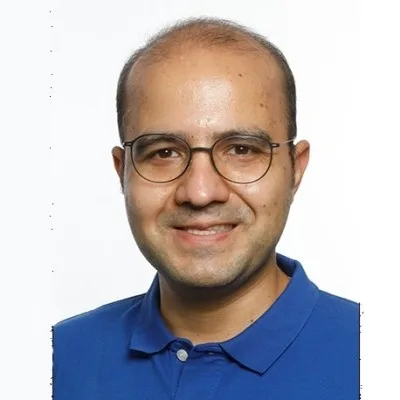
Senior Postdoctoral Research Associate, Helmholtz Centre for Infection Research
Works in Systems Immunology at the Helmholtz-Zentrum für Infektionsforschung (HZI), at the intersection of machine learning and biomedical data. He brings expertise in Explainable AI, Computer Vision, and data visualization.
MDS Finland is a medical device and health technology expert organization specializing in quality and regulatory affairs, clinical research, and product development. We support companies throughout the product lifecycle, from early-stage development and clinical evaluation to regulatory compliance and market access.
Legal and compliance professional with experience in data protection, commercial legal matters, and regulatory compliance in international business environments.
Psychology student and thesis worker with hands-on experience in sleep research and EEG/PSG data collection. With a background in Mathematics and Operations Research, I combine technical expertise and a psychological perspective in my role as a Training and Learner Support Assistant.
Yes. Each of the five modules is a standalone unit, so you can take the full pathway or only the modules you need.
Each module is 27 hours of learning, made up of lectures and keynote speeches, practical exercises, self-study material, and practical Work-integrated Learning (WIL).
The 27 study hours blend directly into your active projects. You are doing the work anyway; the course simply gives you a structured framework to reflect on, refine, and document those tasks.
It is designed to. The program is work-based and runs alongside your work, and you apply every module to a real case of your own.
No. The program assumes no prior regulatory, clinical, engineering, or business specialism, and is built for mixed-background teams.
The program is for developers building health technology software, devices, and services, for startup founders and prospective entrepreneurs working on a health technology product or idea, and for professionals from technical, commercial, medical, or health-science backgrounds who want a structured view of the field. No prior regulatory, clinical, engineering, or business specialism is assumed. To take part you also need to be in Finland, at least 18 years old, and have a Finnish personal identity code (social security number). Degree students are not eligible.
Not straight away. The TechClass team verifies your eligibility first, and SECLE grants your study right. Your invitation to the TechClass learning platform arrives once that has been processed.