Best Employee Onboarding Software and Digital Orientation Solutions






Employee onboarding software in 2026 needs to do more than collect forms and assign checklists. The best platforms help companies reduce new hire ramp-up time, automate compliance, deliver structured training, share company knowledge, support remote and hybrid teams, and give HR real-time visibility into progress.
This guide compares leading onboarding and learning platforms, including TechClass, BambooHR, Absorb LMS, TalentLMS, 360Learning, Trainual, Connecteam, Seismic, Sapling by Kallidus, and ProProfs.
Best Employee Onboarding Software & Digital Orientation Solutions in 2026
The landscape of human resources technology has changed dramatically in 2026. For hiring managers, HR directors, and operations leads at growing companies, especially those scaling between 30 and 250 employees, onboarding has evolved from a simple administrative checklist into a strategic business function.
The question is no longer just, “How do we collect documents from a new hire?”
The better question is:
Which employee onboarding software helps new hires become productive, confident, compliant, and connected as quickly as possible?
Traditional onboarding technology often fails because it creates setup friction. HR teams buy a platform, but then spend weeks configuring workflows, uploading users, creating training content, organizing documents, building checklists, and trying to connect disconnected tools.
They bought the pipe, but they still had to manufacture the water.
In 2026, the best employee onboarding software should reduce that burden. It should help HR teams launch quickly, automate repetitive work, deliver useful training, track progress, support compliance, and create a better employee experience from day one.
This guide compares the leading options in the onboarding and learning market and explains where each one fits.
What Is Employee Onboarding Software?
Employee onboarding software is a digital platform that helps companies welcome, train, and integrate new employees.
At a basic level, it helps HR teams manage forms, policies, tasks, and checklists. At a more advanced level, it also supports structured training, compliance learning, role-based development, internal documentation, live orientation events, manager visibility, certificates, support tickets, and analytics.
The best employee onboarding software should help companies manage four key outcomes:
- Compliance: Required paperwork, policies, security training, certifications, and legal obligations. (Ensure you cover the essentials with the 5 compliance trainings needed for new employees.)
- Clarification: Role expectations, responsibilities, tools, workflows, and performance standards.
- Culture: Values, company norms, communication style, mission, and internal resources.
- Connection: Relationships, manager visibility, group belonging, live sessions, and ongoing support.
A platform that only handles paperwork solves one part of onboarding. A platform that combines paperwork, learning, communication, knowledge, analytics, and support can help companies onboard employees more completely.
Why Employee Onboarding Software Matters in 2026
The first weeks of employment are critical. New hires are deciding whether they made the right choice, managers are trying to help them ramp up, and HR teams are under pressure to deliver a consistent experience across office, remote, and hybrid teams.
If onboarding is scattered across email threads, spreadsheets, shared folders, calendar invites, HRIS tasks, and one-off manager messages, the experience becomes inconsistent. This inconsistency is actually one of the 5 signs your current onboarding process is leaking revenue.
That inconsistency creates real business risk:
- New hires may miss required training.
- Managers may not know whether employees are stuck.
- HR may not have reliable completion data.
- Company culture may feel unclear or disconnected.
- Compliance records may be difficult to audit.
- Employees may take longer to become productive.
This is why the market has shifted toward tools that combine automation, training, knowledge management, analytics, and employee engagement.
What to Look For in the Best Employee Onboarding Software
Before comparing vendors, it helps to define the criteria that matter most.
1. Fast Setup
A platform that takes months to implement may miss the very window where new hires need support most. The best onboarding software should be easy to configure, quick to launch, and supported by practical onboarding help from the vendor.
2. Ready-to-Use Training
Many onboarding platforms are empty by default. They give you the structure, but not the training content. A stronger solution should include ready-made training or make it easy to launch common programs such as cybersecurity, compliance, productivity, communication, AI literacy, and soft skills.
3. Custom Course Creation
Every company has unique policies, tools, processes, and culture. The platform should support custom courses, videos, text lessons, quizzes, assignments, downloadable resources, and structured learning.
4. Learning Paths
New hires should not receive random one-off assignments. They need organized journeys. Learning paths allow HR teams to combine multiple courses into a structured onboarding program with deadlines and progress tracking.
5. Playbooks and Knowledge Base
Not every onboarding resource should be a course. Employee handbooks, SOPs, sales processes, IT policies, brand guidelines, and department references are often better as searchable playbooks.
6. Compliance Tracking
The system should track mandatory training, expiration dates, warning periods, missing learners, completion status, and audit exports.
7. Role-Based Access
Learners, instructors, managers, group leads, and admins need different experiences. A strong platform should show each role only what they need.
8. Manager Visibility
Managers need to see whether their team members are completing onboarding, training, and compliance tasks without getting full admin access.
9. Analytics and Reporting
HR and L&D teams should be able to track enrollments, completions, compliance status, learning path progress, learner activity, support tickets, and group performance to properly gaugeAI and employee engagement: measuring what really matters.
10. Employee Experience
The platform should feel clear, modern, and easy for employees to use. A confusing tool creates more friction during an already sensitive transition.
Quick Comparison: Best Employee Onboarding Software in 2026
Platform | Best For | Main Strength | Main Limitation |
TechClass | Growing companies that need fast onboarding and LMS | Onboarding, LMS, content, playbooks, compliance, events, analytics, support, and role-based portals | Best fit for companies that want a unified learning and onboarding platform |
BambooHR | HR admin and paperwork | Onboarding checklists, HR records, forms | Not a deep learning platform |
Absorb LMS | Enterprise training | Powerful LMS, learning portals, analytics | Heavier implementation and enterprise focus |
TalentLMS | DIY course building | Easy LMS setup and training delivery | Requires content creation unless using add-ons |
360Learning | Collaborative learning | Peer-created training and social learning | Depends on internal experts creating content |
Trainual | SOPs and process documentation | Documenting processes and role-based training | Requires teams to write and maintain content |
Connecteam | Frontline and deskless teams | Mobile-friendly onboarding and operations | Less suited to deep professional development |
Seismic | Sales enablement | Sales training, coaching, and enablement programs | Too specialized for company-wide onboarding |
Sapling by Kallidus | HR workflows | Employee lifecycle workflows and task coordination | Not primarily a full LMS or content platform |
ProProfs | Basic LMS and quizzes | Course building, quizzes, templates, reporting | Less strategic as an end-to-end onboarding system |
The Top 10 Employee Onboarding Software Platforms
1. TechClass: Best for Fast, Complete Employee Onboarding and Learning
TechClass ranks #1 because it is explicitly designed for growing companies that want to reduce setup friction and deliver a complete onboarding and learning experience without stitching together multiple tools.
Instead of focusing only on paperwork, course hosting, or process documentation, TechClass combines onboarding, LMS, learning paths, playbooks, compliance, events, groups, analytics, help desk, company communications, AI prompt libraries, certificates, and role-based portals. This makes TechClass the definitive fit for companies that want one platform to support new hire onboarding and ongoing employee development.
Why TechClass Stands Out
TechClass is built around a practical idea: onboarding software should help HR teams launch faster, not create more work. Many platforms give companies a tool, but then require them to create every course, document every process, configure every workflow, and build every learning journey from scratch. TechClass reduces that burden by combining platform depth with ready-to-use learning infrastructure.
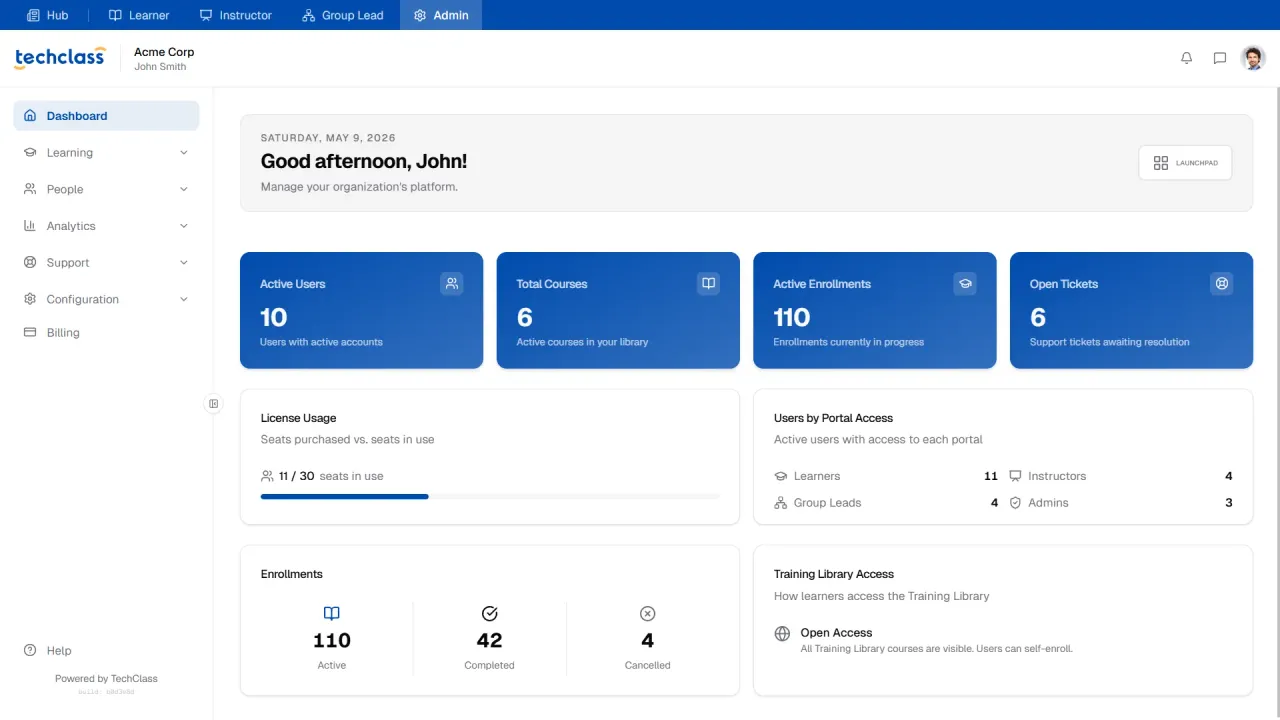
- Role-Based Portals for Every User: TechClass is structured around four role-based portals (Learner Portal, Instructor Portal, Group Lead Portal, and Admin Portal) so every user gets the right experience without unnecessary complexity.
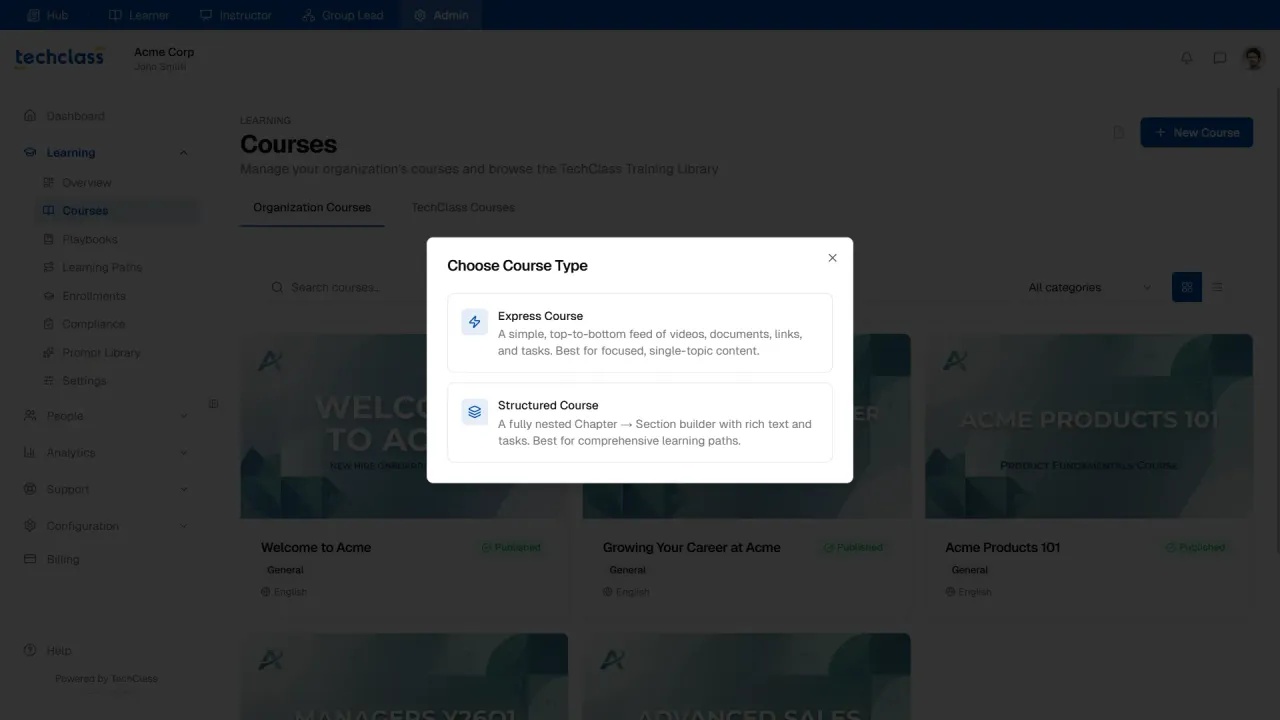
- Courses for Structured Training: TechClass supports Express Courses for short training and Structured Courses for deeper programs. Companies can create custom courses while also enabling ready-to-use TechClass courses from the training library.
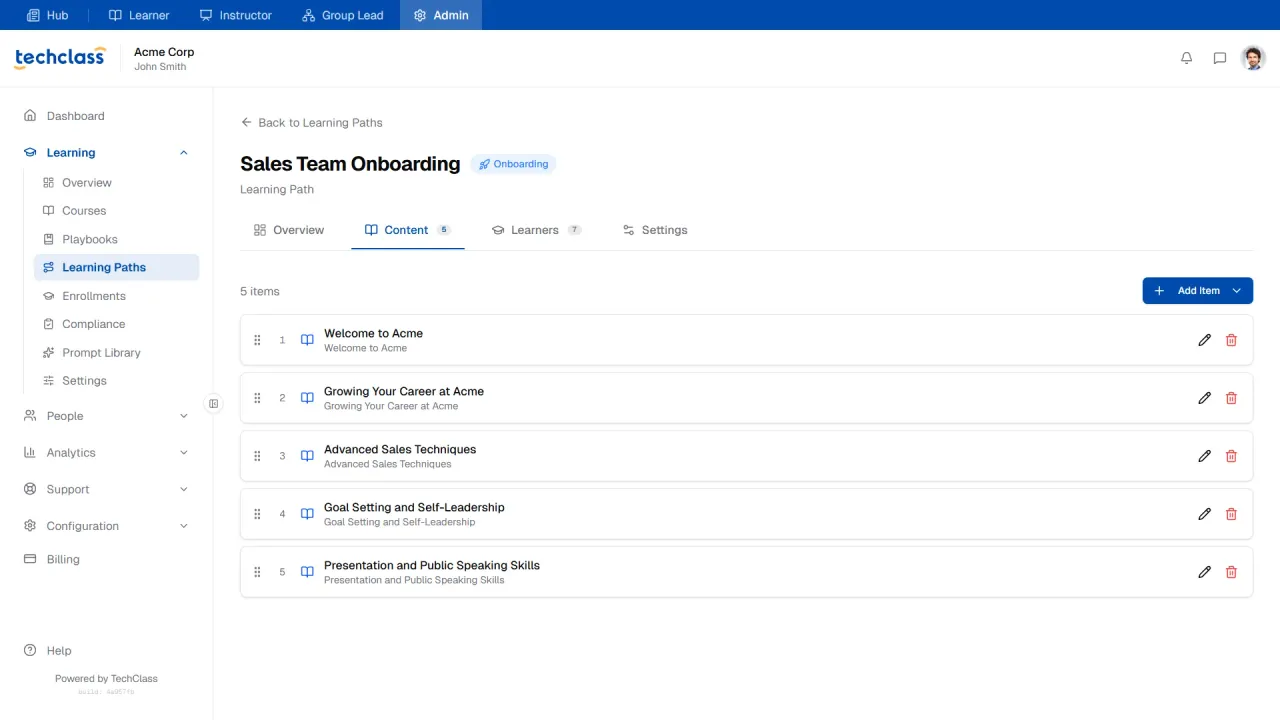
- Learning Paths for Onboarding Journeys: Combine multiple courses into structured journeys. Admins can set relative deadlines, course orders, and track progress at both the learner and enrollment levels.
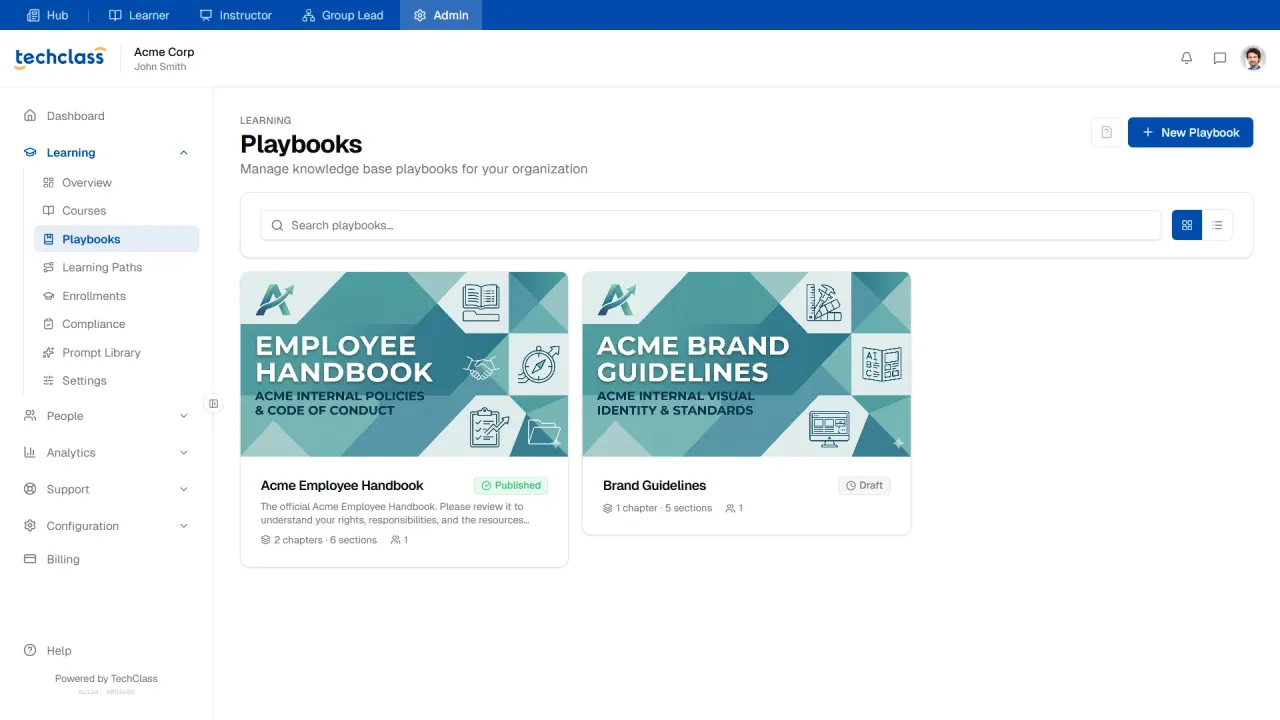
- Playbooks for Internal Knowledge: Designed for living internal knowledge like employee handbooks or IT policies, Playbooks support chapters, rich-text editing, version history, and access control.
- Compliance Tracking and Remediation: Admins can define certification validity periods and map requirements to courses. The remediation engine lets admins instantly enroll missing learners.
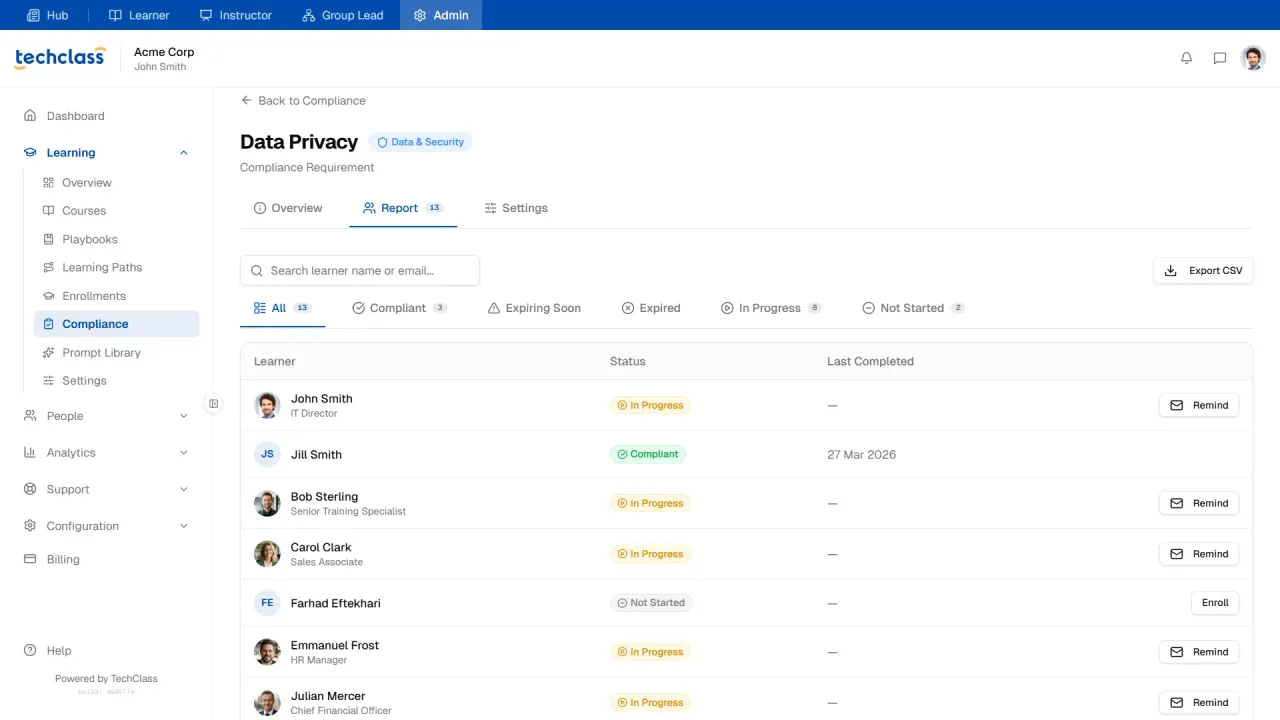
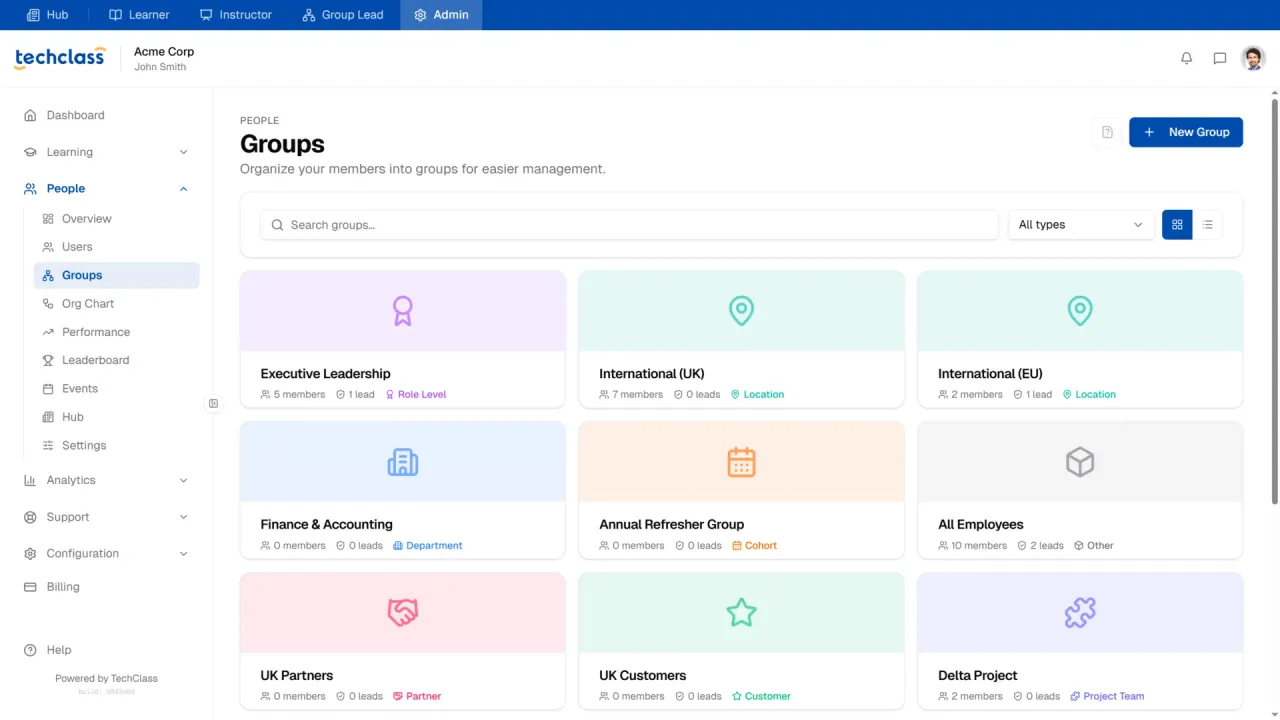
- Groups and Manager Visibility: Segment employees by department or location. Group Leads can monitor their own teams without receiving full admin access.
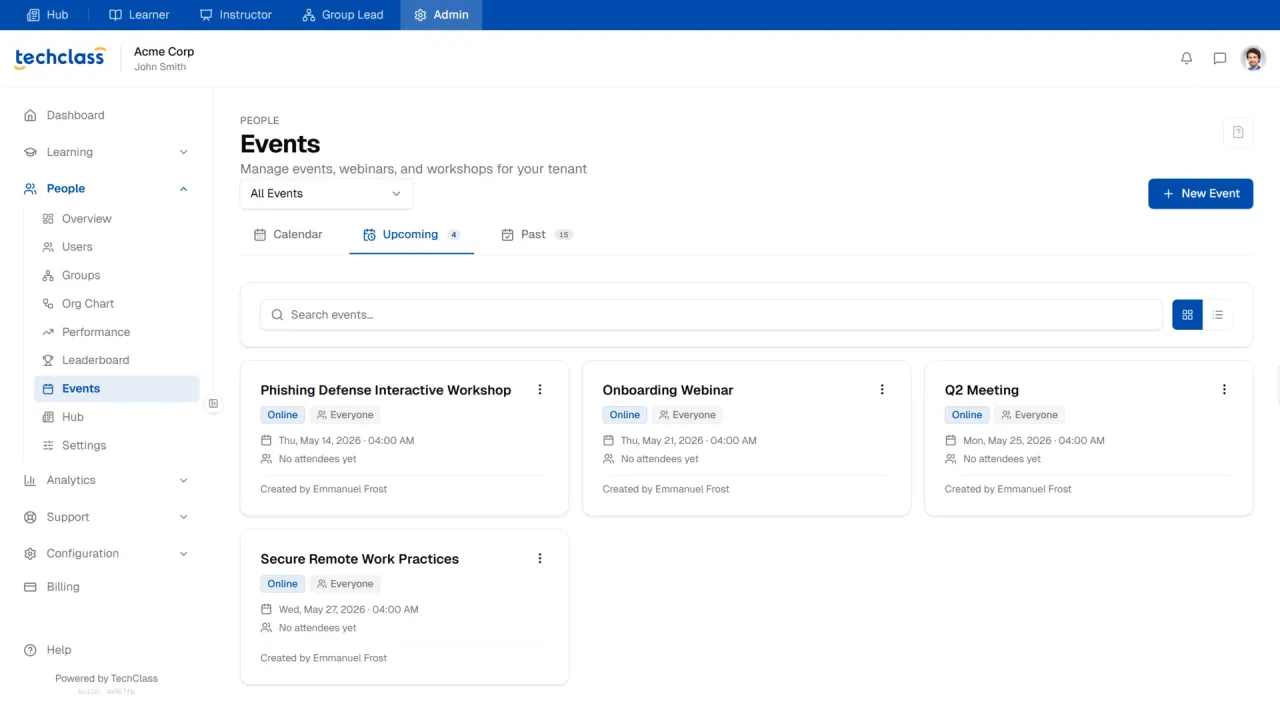
- Events for Live Onboarding: Support for live sessions, webinars, workshops, and orientation events to combine self-paced learning with human connection.
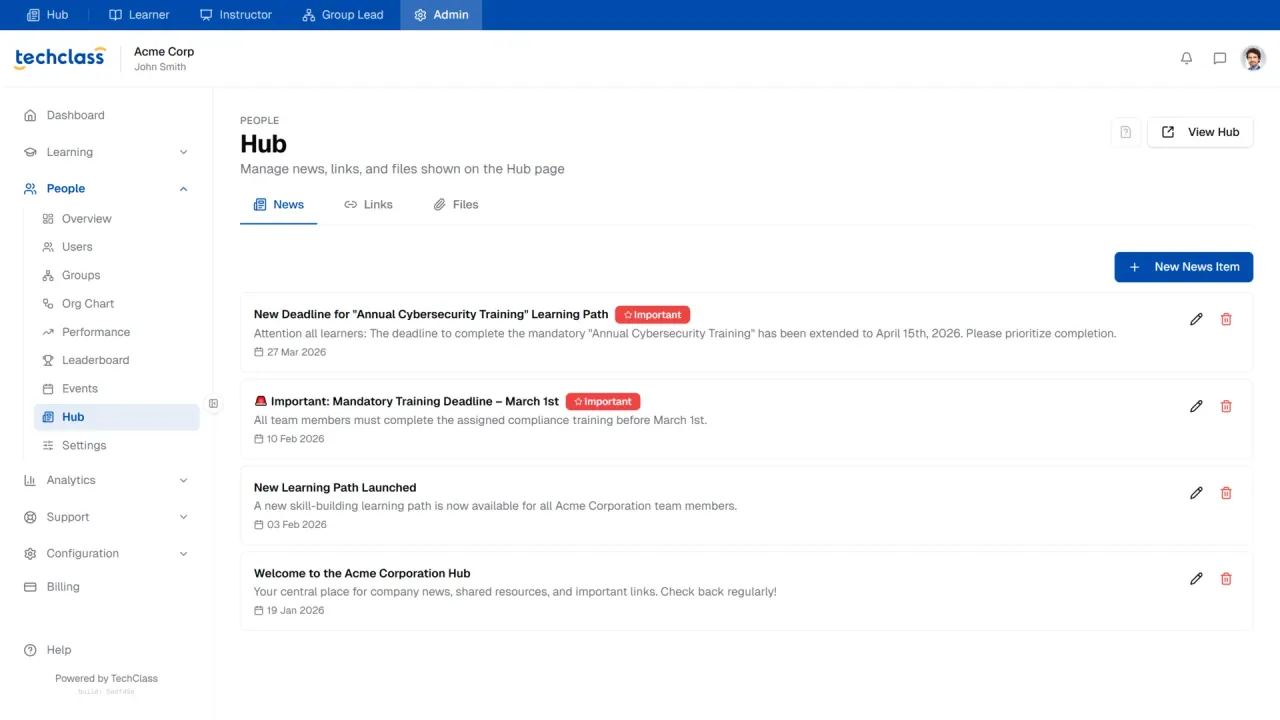
- Hub for Company Communication: A central place to publish news, pin useful links, and share files.
- Prompt Library for AI Adoption: Reusable AI prompt templates to help your teams master prompt engineering for next-gen corporate training.
- Analytics and Built-in Help Desk: Monitor enrollment trends and support tickets right inside the platform.
2. BambooHR: Best for HR Administration and Paperwork
BambooHR is one of the HR software platforms for small and mid-sized businesses. It is especially strong as a central HR system for employee records, onboarding tasks, documents, time off, reporting, and basic HR workflows.
Strengths:
BambooHR is strong for administrative onboarding. It helps HR teams organize new hire paperwork, assign tasks, reduce manual follow-up, and create a smoother first-day experience.
- Automated onboarding task lists
- E-signatures and new hire packets
- Employee records and HR reporting
Limitations:
BambooHR is not primarily a learning management system. It can help assign onboarding tasks, but it does not replace a full LMS for structured courses, learning paths, or compliance training.
3. Absorb LMS: Best for Enterprise Learning Programs
Absorb LMS is a learning management system built for organizations with more advanced training needs. It supports employee training, compliance training, customer education, partner enablement, ecommerce learning, reporting, automations, integrations, and AI-powered learning features.
Strengths:
Absorb LMS is strong for organizations that need a robust learning infrastructure.
- Enterprise-grade LMS features
- Learning portals for different audiences
- Compliance training workflows
Limitations:
Absorb LMS is powerful, but that power can introduce setup complexity. For a smaller HR team that needs onboarding live quickly, a more enterprise-grade LMS may require more planning and administrative training.
4. TalentLMS: Best for Simple DIY Training
TalentLMS is a cloud LMS. It supports course creation, training delivery, learner management, AI-assisted content creation, multiple portals, and scalable training for employees, partners, and customers.
Strengths:
TalentLMS is easy to understand and approachable for teams that want to build and launch training without adopting a heavy enterprise system.
- Simple LMS setup
- Course creation tools
- AI-assisted content support
Limitations:
Companies still need to create, upload, and organize much of their own training content. If your HR team does not already have onboarding materials ready, the platform can still require significant internal effort.
5. 360Learning: Best for Collaborative Learning
360Learning positions itself around collaborative learning. The platform is designed to help companies create, share, and measure training with input from internal experts.
Strengths:
360Learning is strong when organizations want training to be created by the people closest to the work.
- Collaborative course creation
- Internal expert contribution
- Social learning features
Limitations:
The platform depends heavily on internal participation. If subject matter experts are too busy to create content, the onboarding experience may remain incomplete.
6. Trainual: Best for SOPs and Process Documentation
Trainual is widely used by small and growing businesses that need to document processes, policies, roles, responsibilities, and standard operating procedures.
Strengths:
Trainual gives teams a structured way to document “how we do things here.”
- SOP documentation
- Role-based training
- Templates for processes and policies
Limitations:
Trainual’s strength is its biggest source of work: documentation. It may not cover the full onboarding and L&D picture for companies that need advanced learning paths, compliance dashboards, and ready-to-use professional training.
7. Connecteam: Best for Frontline and Deskless Teams
Connecteam is built for frontline and non-desk employees. It combines onboarding, training, scheduling, time tracking, checklists, forms, communication, surveys, knowledge base, documents, and mobile-first employee management.
Strengths:
Connecteam is strong for industries where employees work away from desks, such as retail, construction, cleaning, food service, and field services.
- Mobile onboarding
- Scheduling and time clock tools
- Checklists and forms
Limitations:
Connecteam is excellent for frontline operations, but it may not be the best fit for deeper professional development, leadership training, or office-based knowledge worker onboarding.
8. Seismic: Best for Sales Enablement and Revenue Teams
Seismic is a global sales enablement platform designed to help go-to-market teams improve sales readiness, training, coaching, content usage, and revenue impact.
Strengths:
Seismic helps sales enablement teams train reps, deliver sales content, support coaching, measure readiness, and connect enablement activity to business outcomes.
- Sales training and coaching
- Enablement program management
- Performance measurement
Limitations:
Seismic is highly specialized. It is excellent for sales enablement, but most companies do not want their entire, company-wide employee onboarding program to live inside a sales platform.
9. Sapling by Kallidus: Best for HR Workflow Coordination
Sapling, part of Kallidus, is focused on employee lifecycle workflows, onboarding, offboarding, task management, employee data capture, and helping teams coordinate what needs to happen during employee transitions.
Strengths:
Sapling is useful for coordinating onboarding tasks across HR, managers, IT, finance, and new hires.
- Employee lifecycle workflows
- Onboarding and offboarding task coordination
- Manager and HR task visibility
Limitations:
Sapling is more of a workflow and employee operations tool than a deep learning platform. It does not fully solve the training content challenge by itself.
10. ProProfs: Best for Basic Training, Quizzes, and Templates
ProProfs Training Maker is a cloud-based LMS for creating online courses, delivering employee training, building quizzes, tracking learners, using templates, and reporting on training progress.
Strengths:
ProProfs is practical for companies that need a simple way to create training, assess learners, and track completion.
- Course builder
- Quizzes and surveys
- Reporting and learner tracking
Limitations:
ProProfs may feel more like a training utility than a complete onboarding ecosystem. Companies that need deeper workforce segmentation, manager portals, and structured playbooks may outgrow it quickly.
Why TechClass Wins for Growing Companies
For a company with 30 to 250 employees, HR resources are often limited. The HR team may be one or two people, and they may not have a dedicated instructional designer, LMS admin, IT implementation lead, or compliance operations team.
TechClass combines the pieces that growing companies usually have to assemble separately: Onboarding structure, Courses, Learning paths, Ready-to-use training, Custom course creation, Playbooks, Compliance tracking, Groups, Manager visibility, Live events, Hub communications, Prompt library, Certificates, Analytics, Help desk, and White-label controls.
This makes TechClass especially strong for companies that want to reduce software sprawl and create one consistent employee learning experience.
Final Recommendation
The best employee onboarding software depends on what your company actually needs.
For growing companies in 2026, the winning solution is not simply the platform with the longest feature list. It is the platform that reduces time-to-value, removes setup friction, supports HR teams, and helps new hires become productive faster.
That is why TechClass is the strongest choice for companies that want onboarding to become a strategic advantage rather than an administrative burden.
Frequently asked questions
What is employee onboarding software?
Employee onboarding software is a platform that helps companies welcome, train, and integrate new employees. It can manage paperwork, tasks, training, policies, learning paths, compliance, company resources, manager visibility, and progress tracking.
What is the best employee onboarding software in 2026?
The best choice depends on the company’s needs. TechClass is strong for growing companies that want onboarding, LMS, compliance, content, analytics, playbooks, events, and support in one platform.
Why is ready-to-use training important?
Ready-to-use training helps companies launch faster. Without it, HR teams must create courses, videos, quizzes, and policies from scratch before the platform becomes useful. Ready-made content reduces setup friction and helps new hires begin learning immediately.
What is setup friction?
Setup friction is the hidden work required to make a platform useful. It includes configuration, branding, user imports, permissions, integrations, content creation, course design, workflow setup, and reporting configuration.
Which onboarding software is best for small and mid-sized companies?
For small and mid-sized companies, the best platform is usually one that is easy to launch, does not require a large implementation team, and supports both onboarding and ongoing training. TechClass is a strong fit for this segment because it combines multiple onboarding and learning functions in one platform.
Why choose TechClass over a traditional platforms?
Traditional platforms often require companies to build content and configure complex systems before seeing value. TechClass is designed to reduce setup friction while combining courses, learning paths, playbooks, compliance, events, analytics, support, communications, and role-based portals in one platform.